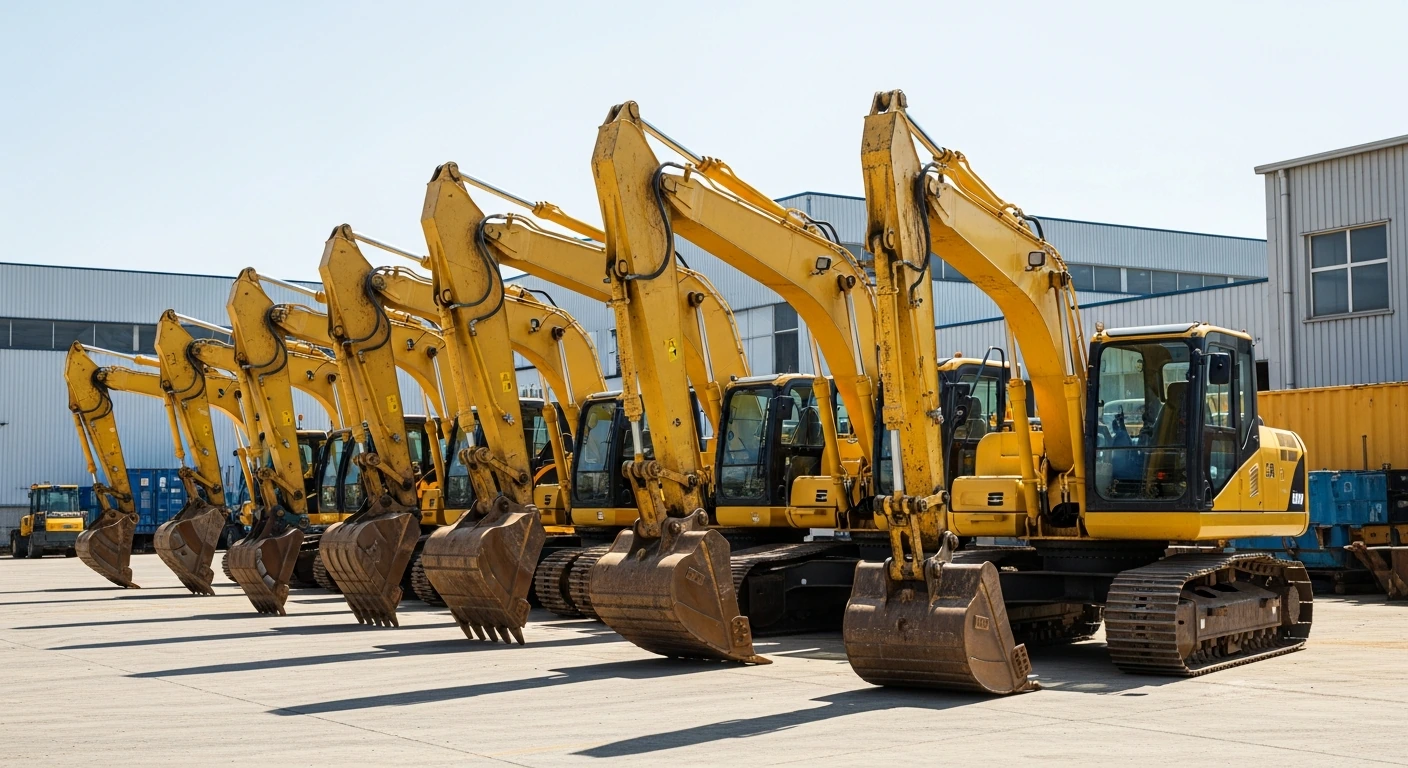

Equipment leasing lets a Canadian business use the vehicles, machinery, and technology it runs on for a fixed monthly payment instead of buying outright. The main benefits are conserved capital, current technology, tax deductions, simpler accounting, predictable payments, flexibility, and lower maintenance costs. Canadian companies from first-year startups to established firms lease for these reasons.
What is Equipment Leasing?
Equipment leasing is a contract where one party, the lessor, lets another, the lessee, use an asset such as machinery, vehicles, or technology for a set period in return for regular payments. A lease does not give you ownership. You get the right to use the equipment while the lessor keeps the title. That trade of ownership for flexibility and cash drives most of the benefits below.
There is a separate guide to equipment leasing with more detail.
Key Benefits of Leasing Equipment for Canadian Businesses
The seven key benefits of leasing equipment are conserved capital, current technology, tax deductions, simpler accounting, predictable payments, flexibility, and lower maintenance costs.
Conserve Capital and Improve Cash Flow
Conserving capital means keeping the large upfront sum that buying outright would take, money that could go to marketing, research, or expansion. A lease usually needs only a small payment to start, so your cash stays free for where it earns the most.
Better cash flow gives a Canadian business room to ride out a rough patch, take an opportunity, or fund growth. Capital is tight for many small and mid-sized firms, and leasing is an alternative to traditional borrowing.
Stay Up-to-Date with the Latest Technology
Staying current means moving to newer, more efficient models when the term ends instead of holding on to a depreciating asset. In construction, manufacturing, and healthcare, the latest equipment lifts productivity and cuts costs, so this keeps you competitive. Upgrading every few years beats running one machine into the ground.
Tax Benefits
The main tax benefit is that operating lease payments are generally fully deductible as a business expense. That lowers your taxable income, often a bigger near-term break than depreciating a purchase over several years.
The exact treatment depends on the lease type and your situation, so check with a tax professional.
Simplified Accounting
Simplified accounting means lease payments are booked as operating expenses and, depending on the structure, the asset may stay off your balance sheet. That can improve your financial ratios, make other financing easier to secure, and reduce bookkeeping and admin.
This helps a small business with limited accounting resources, leaving the owner more time to run and grow the company.
Predictable Payments
Predictable payments are the fixed monthly amounts most leases use. They make budgeting and forecasting straightforward.
Owning, by contrast, can bring unexpected costs for repairs, upkeep, and insurance. Many leases include maintenance and service, which reduces those surprises further.
Flexibility and Scalability
Flexibility means you can upgrade or scale equipment through the lease agreement as you grow or your work changes. That suits a fast-moving or fast-growing business.
A construction company, for example, might lease extra equipment for a big job and return it when the project wraps up. It scales up without the long-term commitment of buying. In some cases, leasing is the difference between taking a contract and passing on it.
Reduced Maintenance and Repair Costs
Reduced maintenance costs come from leases that bundle maintenance and repairs, which takes that load off you and limits downtime. This matters most for complex or specialized equipment that needs trained technicians, since you avoid hiring and training in-house service staff.
It also appeals in transport and logistics, where a machine out of service hurts productivity and profit.
Industries That Benefit Most from Equipment Leasing
The industries that rely on leasing most are construction, manufacturing, healthcare, transportation, technology and agriculture. Construction companies lease heavy machinery, excavators, and cranes. Manufacturers lease production lines, automation, and material-handling equipment. Clinics and hospitals lease medical and diagnostic imaging equipment, and transport companies lease trucks, trailers, and commercial vehicles. Technology firms lease computers, servers, and IT equipment, and farms lease tractors, combines, and other field equipment. The common thread is equipment that is expensive, dates quickly, or both.
Tip
When you compare leasing companies and their offers, read the lease agreement closely, including the rate, the term length, and any fees or penalties. Knowing those details up front helps you pick the option that fits.
Types of Equipment Leases
The three main types of equipment lease are operating leases, capital leases and sale-leasebacks.
| Type | How it works |
|---|---|
| Operating lease | Shorter term. The lessor keeps ownership and usually handles maintenance and insurance. |
| Capital lease | Longer term. Works like a loan and gives you the risks and rewards of ownership. |
| Sale-leaseback | You sell equipment you already own to a lessor and lease it back to free up cash. |
Which one fits depends on your needs and finances. Leasing may suit one business while a loan suits the next. There is more in the guide to how equipment leasing works.
In Summary
Leasing equipment helps Canadian businesses of every size conserve capital, improve cash flow, stay current on technology and simplify the books. Weigh your needs and compare the options before you choose.
Ready to look at equipment leasing for your business? Apply for equipment financing or estimate your monthly payment.
Frequently Asked Questions
Is leasing equipment better than buying in Canada?
It depends. Leasing is better when you want to conserve capital and upgrade often; buying is better when the equipment lasts and the technology moves slowly. Leasing also brings tax advantages, while buying gives you ownership and long-run savings. Weigh your cash flow, your tax situation, and how long the equipment will stay useful.
What are the tax implications of leasing equipment in Canada?
Operating lease payments are generally deductible as a business expense, which lowers your taxable income. With a capital lease, you claim capital cost allowance on the equipment plus the interest instead. The specifics vary, so ask a tax professional.
What happens at the end of the lease term?
Usually you can return the equipment, renew for another term, or buy it at fair market value. Which options you get depends on your lease agreement.
Can I lease used equipment?
Yes. Leasing used equipment can be a cost-effective route on a tighter budget. Inspect the equipment and confirm it is in good working condition before you sign.
What are the credit requirements for leasing equipment?
They vary by lessor and equipment. Lessors generally look at your credit history, your financials, and your ability to carry the payments. A strong credit profile and a solid business plan improve your odds of approval.
Share this article
Need Equipment?
Get approved for equipment financing in as little as 24 hours. No obligation application.
Get a Free QuoteOr call us directly
1-833-924-9554