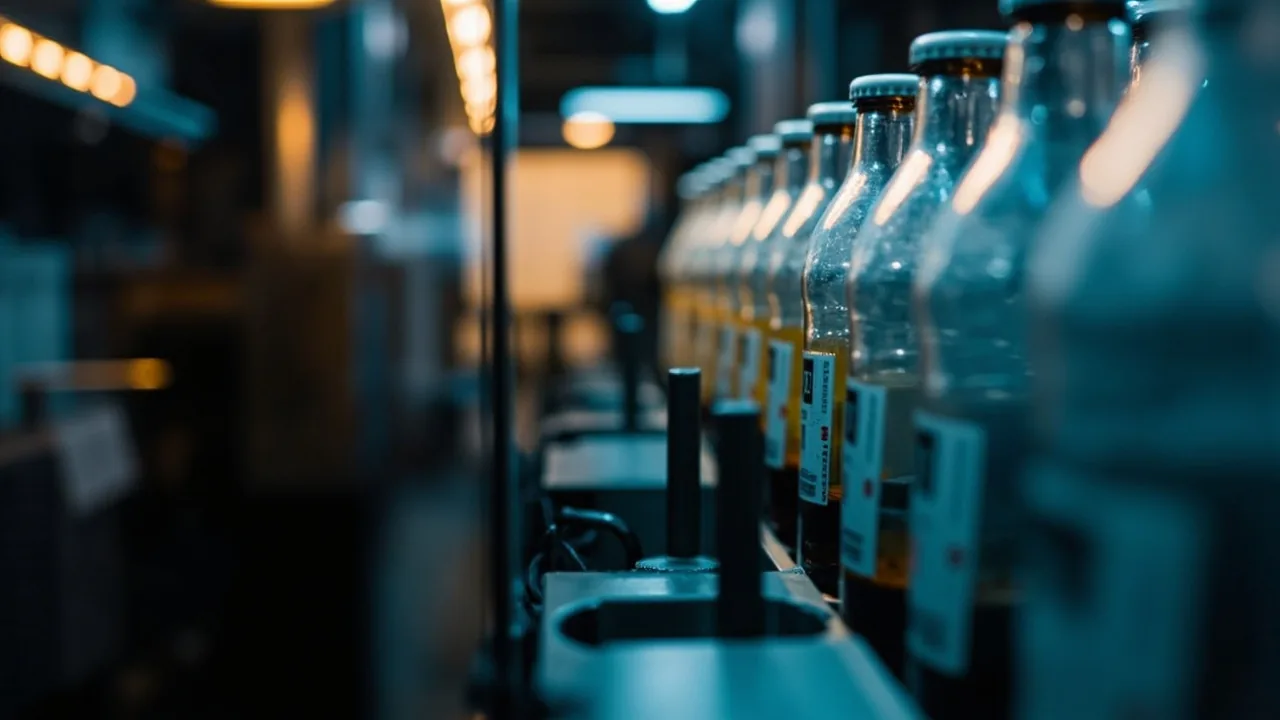

An automated bottling line fills, caps, and labels thousands of units an hour, and financing spreads its steep cost so a Canadian producer can scale on schedule.
An automated bottling line is a major capital outlay for any beverage maker, food processor, or packaging plant. For most producers, the full price of a complete line makes buying outright impractical, so equipment financing is the usual way to acquire one. It helps to know your financing options early.
Understanding Automated Bottling Lines
A bottling line is one integrated system that chains several pieces of packaging equipment together to run the whole bottle workflow end to end. Filling, capping, labelling, and packing all happen in a single continuous pass. A modern line can move thousands of bottles an hour, which cuts labour and keeps quality consistent from one run to the next.
The cost varies widely with capacity, the level of automation, and the bottles you run. A craft brewery might want a compact line doing a few hundred bottles an hour. A large producer needs an industrial setup handling tens of thousands. Either way, the price is why financing the purchase, rather than paying cash, is the usual route.
Why Finance a Bottling Line in Canada
Financing a bottling line gets you the production capacity without draining your cash. You spread the cost across manageable monthly payments instead of one large cheque.
Your working capital stays free for day-to-day operations, inventory, and unexpected costs, and that liquidity carries you through a slow period. Fixed payments make planning straightforward. Financing also puts upgrades within reach that a tight capital budget would otherwise rule out.
Ready to finance a bottling line? Apply for equipment financing or estimate your monthly payment.
Equipment Finance Options for Bottling Equipment
The two main structures for bottling equipment are leases and loans, and the differences decide which one fits your plan.
Equipment Leasing
An equipment lease lets you use the line for a set term, usually two to seven years, in exchange for regular payments to a financing company. At the end, you can buy it at a set price, return it, or move up to a newer system. Leasing suits a producer who wants to stay current on technology or expects to upgrade soon. The monthly payment is usually lower than a loan's because you are paying for use rather than ownership.
Equipment Loans
An equipment loan uses the line itself as collateral, which tends to earn better interest rates than unsecured borrowing. Once you have paid it off, the equipment is yours. A loan makes sense when you will run the line for years and want to build equity, and the interest is often deductible. New or used, the machine backs the loan the same way.
Canadian Tax Advantage
Under Canadian tax law, operating lease payments are generally deductible as a business expense. That can mean meaningful savings, especially at higher brackets. With a capital lease or a loan, you claim capital cost allowance plus interest instead. Review your structure with a Canadian tax professional to get the treatment right.
The Application and Approval Process
The application process in Canada is far simpler than it used to be, and many lenders take the whole thing online. You share basic details on the operation, the equipment you want, and financials showing you can carry the payments.
The review weighs your credit history and statements for reliability, the equipment's type and value as security, and your revenue and cash flow to confirm the payment fits. A bottling line that holds its value works in your favour.
Many applications get preliminary approval in hours and final approval within days on a clean file. The whole path from application to delivery often takes less than two weeks, depending on your timeline and how quickly the documentation comes in.
Benefits of Financing vs. Buying Bottling Equipment
Buying outright avoids debt and gives you ownership on day one, but most bottling operations lean toward financing. Financing:
- keeps working capital free for operations and growth
- locks in predictable monthly costs you can budget around
- leaves your existing credit lines open for other needs
- makes upgrades possible without a large capital outlay
- carries the tax benefits that come with a financing arrangement
Beverage and packaging technology keeps moving. Financing lets you stay competitive on current equipment instead of waiting years to save up, which matters most when demand is climbing or you are adding a product line.
Canadian Considerations for Equipment Finance
Financing in Canada involves tax incentives, provincial programs, and exchange rates.
The federal government encourages investment in manufacturing equipment through tax incentives. Capital cost allowance lets you deduct eligible equipment over time, while operating lease payments are generally deductible in the year you pay them.
Provincial programs in British Columbia, Ontario, Quebec, and elsewhere often add support for manufacturing, from better rates to grants or tax credits that sit alongside private financing. Check what your own province offers.
Many lines are imported from the United States or Europe, so the exchange rate matters. Financing spreads the cost over time instead of forcing you to pay a lump sum at whatever the rate is that day.
Choosing the Right Lender for Your Bottling Equipment
The right lender is one that understands bottling equipment, because terms, rates, and service vary widely. A lender who specializes in packaging equipment and bottling lines understands the equipment's resale value and lifespan, which usually shows up in better terms. A generalist may not, and may quote you less favourable terms. Beyond that:
- compare offers from a few sources
- check that the payment structure can adjust to your cash position
- get clear on every fee
- confirm the lender knows the Canadian beverage and packaging industry
- judge the service you get while applying
Equipment Leasing Canada arranges financing for beverage and packaging producers across Canada.
Take the Next Step Toward Financing Your Bottling Line
Financing lets you get the line now and spread the cost, instead of waiting years to save the capital.
Before you apply, consider whether leasing or buying fits your longer plan, whether the payments line up with how your revenue comes in, and what the total cost is once you count the rate and the fees. Options include traditional banks, credit unions, and specialized equipment financiers across Canada, whether you run a craft brewery in British Columbia, a specialty drinks company in Ontario, or a food plant in Quebec.
Apply for equipment financing to compare your options for a bottling line.
Frequently Asked Questions
How much does a bottling line cost?
From around $50,000 to over $1 million, depending on capacity, automation, and features. A basic semi-automatic line for a small operation might start around $50,000 to $150,000. A mid-range automated system doing 2,000 to 5,000 bottles an hour usually runs $200,000 to $500,000, and high-speed industrial lines can top $1 million. Used equipment lowers the entry point, and new and used bottling machines can be financed at every budget level.
Can you finance a vending machine?
Yes. A vending machine is a tangible asset that holds value, so like a bottling line it works as collateral for a loan or lease. Many Canadian financiers cover them, especially for food-service, convenience-retail, and automated-sales operators. Terms depend on the machine's value, your credit, and the payment plan you want.
What is the difference between equipment financing and inventory financing?
Equipment financing covers buying or leasing physical assets such as machinery, production lines, and vehicles, with the equipment itself as collateral. Inventory financing uses your stock as security for a loan or line of credit. For a bottling operation, equipment financing fits the production line, while inventory financing helps manage raw materials and finished goods.
What documents do I need to apply for equipment financing?
Business registration, two years of financial statements, bank statements showing your revenue, the equipment details with a quote or invoice, and personal ID. Newer operations may be asked for a plan or projections. Exact requirements vary by lender and amount, but having these ready speeds approval.
Share this article
Need Equipment?
Get approved for equipment financing in as little as 24 hours. No obligation application.
Get a Free QuoteOr call us directly
1-833-924-9554