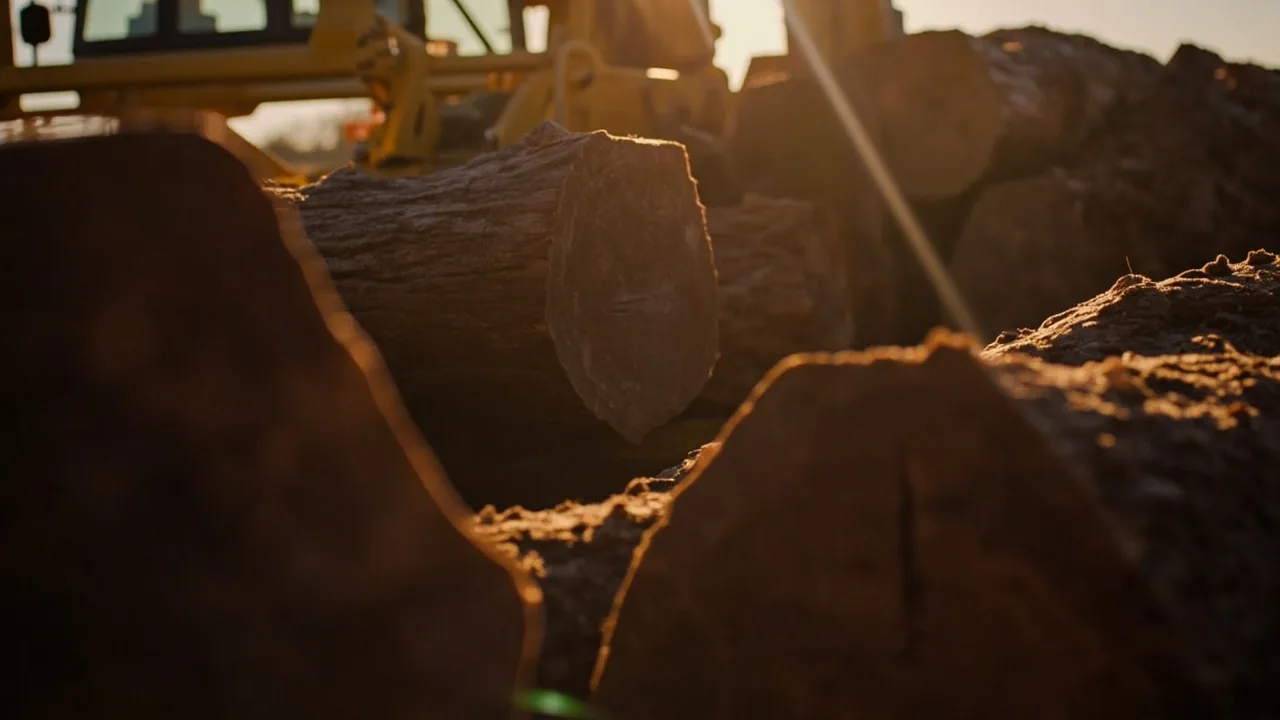

A log forwarder carries cut timber from stump to roadside and costs well into six figures, which is why most Canadian forestry companies finance one rather than buy it outright.
A forwarder carries felled trees from the cutting site to the roadside landing, bridging the gap between the harvester and the truck. In the woods of British Columbia, Ontario, Quebec, and Atlantic Canada, a reliable forwarder fleet can decide whether you hit contract deadlines or lose them to a competitor.
A new heavy-duty forwarder runs $350,000 to $750,000, depending on spec and maker. For many Canadian forestry businesses, especially smaller operators and independent contractors, paying that in cash squeezes working capital and limits growth. Financing spreads the cost over time.
Understanding Log Forwarders and Their Role in Canadian Forestry
A forwarder carries full tree lengths or processed logs on built-in bunks, unlike a skidder, which drags logs along the ground. Carrying the load protects the forest floor, which fits the sustainable practices that Canadian certification programs and export markets increasingly demand.
The machines have improved a lot in two decades. Modern forwarders have advanced hydraulics, climate-controlled cabs, better traction control, and improved fuel economy. Contractors working tough ground, such as the mountains of British Columbia or the muskeg of northern Ontario, need equipment that holds up under heavy use.
Your business model shapes the financing structure that fits. An operation working mostly Crown-land allocations has different needs from one contracting for large companies like West Fraser, Canfor, or Resolute.
Why Financing Log Forwarders Makes Sense for Your Business
Financing gets you the machine without draining cash reserves. A forestry operation needs working capital for payroll, maintenance, and fuel, and financing keeps that money available.
Forestry is seasonal, and revenue swings with the seasons. Spring breakup stops work in many regions, which puts pressure on cash during the downtime. A financing structure can be built around your cash flow, with a payment schedule that accounts for those swings.
The tax treatment of financed equipment can also work in your favour under Canadian rules, which is worth understanding before you decide how to acquire the machine.
Types of Financing Options Available in Canada
The main ways to finance a forwarder in Canada are an equipment loan, a lease, and a commercial loan or line of credit. Each suits a different situation, tax position, and long-term plan.
Equipment Financing Loans
An equipment financing loan lends you the money to buy the forwarder, with the machine as collateral, which usually earns a better rate than unsecured borrowing. Once you pay it off, the machine is yours. It suits a business that wants to own and run its equipment for years. The interest may be tax-deductible, and you can claim capital cost allowance on your return.
Equipment Leasing
A lease lets you run the forwarder while making payments to the lessor. An operating lease often bundles maintenance and lets you trade up at the end. A finance lease works more like a loan, with ownership at the close. Leasing appeals to a company worried about obsolescence or wanting flexibility. Forestry technology keeps advancing, and each lease transition lets you pick up better fuel economy and lower emissions.
Commercial Loans and Lines of Credit
A commercial loan comes from a bank, credit union, or other financial institution. It can be more flexible on how the money is used but usually requires stronger credit and more paperwork. For an established forestry company with a solid history, the rates and terms can be competitive.
Financing Tip
When you compare offers, look at the total cost of borrowing, including interest, fees, and prepayment options, not just the headline rate. Make sure the lender understands the seasonal cash flow of forestry work.
Benefits of Financing Over Buying Outright
Paying cash avoids debt, but most forestry companies find financing the better strategy. Financing:
- keeps working capital free for operating costs, fuel, and the surprise repairs of a busy season
- gives you fixed payments that make budgeting simple all year
- offers tax benefits through interest deductions and accelerated depreciation
- gets you newer equipment with better fuel economy and less maintenance
- protects you against obsolescence as the technology moves on
- keeps credit available for other opportunities or emergencies
Forestry is a competitive market where efficiency drives profit. A fleet of modern forwarders raises throughput, cuts fuel per unit of timber moved, and reduces downtime from equipment failures.
The Application Process for Financing Log Forwarders in Canada
Applying for forwarder financing starts with an online application you can finish in hours. Equipment Leasing Canada works with businesses in every province and territory.
The application covers your business, the equipment, and the structure you want. Most lenders need business registration, financial statements or tax returns, and the machine's details with a dealer quote or invoice. For forestry, lenders may also weigh your contract history with large companies, your fleet, and your experience with similar machines. These help set the loan amount, term, and rate.
Timing depends on how complete your file is and on your financials. Some applicants hear back in 24 to 48 hours, while a more complex file takes longer. A specialized equipment lender usually moves faster than a bank.
Factors That Affect Your Financing Terms
Four factors shape the terms you get on a forwarder. Knowing them helps you put forward a stronger application and negotiate better.
Credit Profile and Business History
Lenders look at both personal and business credit. A strong history earns lower rates and more flexible terms. Equipment Leasing Canada works with a range of credit profiles, for established companies and newer ones alike.
Equipment Specifications and Age
New equipment usually gets the best terms, with a full warranty and a long working life. Late-model used equipment qualifies for competitive financing too, though the rate may be slightly higher. Make and model matter: machines from established brands like John Deere, Ponsse, or Komatsu often get preferential treatment.
Down Payment Requirements
Most deals require a down payment, typically 10% to 25% of the price. A bigger one lowers your monthly payment and can improve the rate. Some lenders offer low- or no-down structures for businesses short on capital, though that raises the total cost of borrowing.
Loan Term Selection
Term length drives both your monthly payment and your total interest. A shorter term means higher payments but less interest overall. A longer term lowers the monthly cost but adds to the total interest. Balance the two against your cash flow and your fleet plan.
Tax Advantages for Canadian Businesses
Canadian tax rules offer deductions however you pay: capital cost allowance on equipment you own, interest on a loan, and the payments on an operating lease.
Under the Income Tax Act, you can claim capital cost allowance on equipment you own, which reduces taxable income over the asset's life. Those deductions apply directly to financed equipment you own. Operating lease payments are generally deductible as a business expense, which can deliver faster relief than depreciation. Interest on equipment loans is generally deductible as well, giving you an ongoing deduction through the repayment period.
The treatment differs for a partnership, a corporation, and a sole proprietorship, and provincial rules apply too. Work with your accountant or a Canadian tax professional so the financing lines up with your tax planning.
Making the Right Financing Decision for Your Operation
The right financing decision depends on your needs, your growth plans, your cash flow, and your long-term equipment plan.
If you upgrade often to stay on current technology, leasing's regular transitions may fit. If you would rather own and run a machine for years, a financing loan tends to win on long-term value and eventual ownership.
Look at your current fleet and what is coming. Many strong operations run a mix of owned and leased equipment, matched to different jobs, to manage capital well.
Equipment Leasing Canada finances forestry equipment across the country, from boreal Manitoba to coastal British Columbia and the timber country of New Brunswick.
Ready to finance a log forwarder? Apply for equipment financing or estimate your monthly payment.
Related guides cover equipment leasing, equipment financing, and how equipment leasing works.
Frequently Asked Questions
What credit score is needed to finance a log forwarder in Canada?
Requirements vary, but a business credit score above 650 generally improves your odds and your terms. Approval is still possible with some credit history challenges. Strong revenue, established contracts, and a reasonable down payment all help offset a lower score.
How long does it take to get approved for forestry equipment financing?
Often 24 to 72 hours with complete documentation. The timing depends on how complete your file is, how complex your financials are, and the lender's review. Having your registration, financial statements, and equipment quotes ready up front speeds it up.
Can I finance a used log forwarder instead of buying new?
Yes. Used financing is common for late-model forwarders. Lenders usually set an age limit, often 7 to 10 years depending on the maker and condition. A used machine costs less and still keeps working capital free.
What documentation is required when applying for log forwarder financing?
You need business registration, two years of financial statements or tax returns, bank statements, equipment quotes or invoices, and personal ID. Self-employed applicants may need extra personal financials. You get a checklist during the application so you can submit everything at once.
Are there seasonal payment options for Canadian forestry businesses?
Yes. Many lenders, including Equipment Leasing Canada, offer payment structures built around forestry's seasons: skip payments in slow months, stepped payments that rise in the busy stretch, or annual payments. Talk your cash-flow pattern through with your lender to line payments up with your revenue.
Share this article
Need Equipment?
Get approved for equipment financing in as little as 24 hours. No obligation application.
Get a Free QuoteOr call us directly
1-833-924-9554