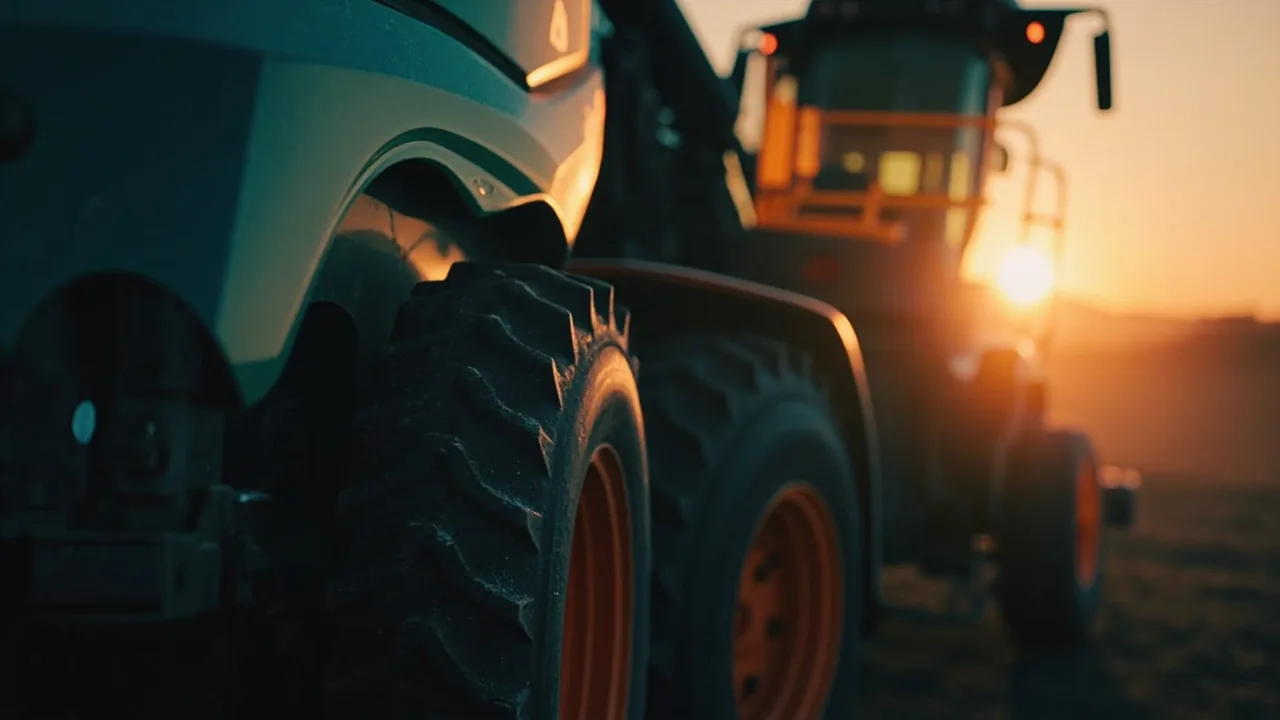
Financing High-Capacity Combine Harvesters

At $800,000 or more, a high-capacity combine is one of the biggest purchases a Canadian grain farm makes, and financing turns that number into a payment tied to the harvest. It pays to understand how the financing works before you sign anything.
A modern combine reaps, threshes, and cleans grain in one pass. Whether you grow grain in Saskatchewan, run a mixed farm in Manitoba, or work fields in Ontario or Quebec, the right machine improves both your harvest and your bottom line. The price is the obstacle, which is why most growers look at financing rather than writing one enormous cheque.
Understanding Combine Harvester Financing in Canada
Combine financing lets you take the machine now and pay it off over time, with interest, instead of emptying the account up front. That matters in farming, where income swings with commodity prices, the weather, and the yield you actually harvest. Keeping cash free is a large part of running a farm well.
Agricultural lending in Canada is its own specialty, built around how a farm earns. Good lenders match the deal to the calendar, so payments are light when money is tight and heavier once the crop is in. That way you carry the machine without straining the operation through the lean months.
The sector contributes billions to the national economy every year, and financing helps it stay competitive by putting current technology in front of growers who would otherwise wait years to afford it.
Types of Financing Options for Combine Harvesters
The main options are an equipment loan, a lease, and dealer financing. The best one depends on your books, your tax position, and what you plan to do with the machine later.
Traditional Equipment Loans
An equipment loan is the simple route: you borrow a set amount, buy the combine, and the machine stands as collateral, which usually keeps the rate competitive. After the last payment, it is yours free and clear, and you can sell it whenever you like.
Terms on agricultural equipment tend to run three to seven years, sometimes longer on high-value machines. Your rate depends on your credit history, the age and condition of the combine, and how your finances look to a lender.
Equipment Lease Agreements
A lease is the alternative many Canadian growers prefer. You pay to use the machine over a set term, and at the end you usually buy it at fair market value, return it, or move up to something newer.
The tax treatment is the main draw. Under the Income Tax Act, operating lease payments are generally deductible as a business expense, which can beat the slower depreciation schedule on a purchase. The Canada Revenue Agency's guidance on leasing costs says to “Deduct the lease payments incurred in the year for property used in your business.” (CRA)
Tax Tip for Canadian Farmers
Under the Canadian Income Tax Act, you can claim Capital Cost Allowance (CCA) plus interest on a machine financed with a loan or a capital lease. Operating lease payments are generally deductible as a business expense. A tax professional can tell you which structure gives your operation the bigger advantage.
Equipment Financing Through Dealerships
Dealer financing is in-house lending from a manufacturer or dealer. Programs like John Deere Financial are built for farming and often come with competitive rates and occasional promotions, such as deferred payments or a reduced rate for buyers who qualify.
It is convenient to handle the machine and the paperwork in one place. Still, compare those offers with an independent lender to be sure you are getting the best terms.
Factors That Affect Your Financing Terms
Three factors shape your financing terms: your credit, your down payment, and your repayment period. Knowing what a lender weighs lets you come prepared and often get a better deal.
Credit Score and Financial History
Your personal and business credit shape the rate and the terms. Lenders read those scores as a sign of whether you will pay them back. The bar varies, but most want to see at least the fair-to-good range.
Weak credit does not necessarily shut the door. Some lenders specialize in farm clients the banks pass on, and a good specialist will weigh your experience, your land, and your maintenance history, not just a number.
Down Payment Requirements
Most deals require a down payment, usually ten to twenty percent of the price, though that shifts with your credit, the age of the machine, and the lender. A larger down payment lowers your monthly payments and sometimes your rate.
On a high-capacity combine costing more than a few hundred thousand dollars, the down payment is a large sum. Plan for it early.
Repayment Period and Payment Amounts
The repayment period drives the size of your payment. A longer term means smaller payments but more interest in total. A shorter term means less interest but bigger payments.
Match the choice to your cash flow. Farm income clusters around harvest, so a schedule that runs light through planting and heavier after the grain sells can fit the year far better than flat payments.
Managing Cash Flow With Equipment Financing
Cash flow is what keeps a farm running, and how you pay for a combine feeds straight into it. Balance the cost of the machine against everything else the operation needs.
Financing keeps working capital available for seed, fertilizer, infrastructure, and seasonal workers, and leaves a cushion for the year a gearbox fails or the rain won't stop.
A faster combine also pays its way through a tighter harvest window, better grain quality, fewer weather losses, and more acres covered by the same crew. Those gains usually cover the cost of financing, especially when the rate is fair and the terms suit you.
Choosing the Right Combine Harvester for Your Operation
Choosing the right combine comes before financing it. High-capacity combines come in a wide range of sizes and setups, each built for certain crops and scales of farm.
For wheat, barley, and other small grains across the prairies, a big-tank combine with a wide header covers acreage quickly inside a narrow weather window. If you also grow canola, soybeans, or corn, the right spec can look quite different.
New machines come with full warranties and the latest features, such as GPS guidance, yield monitoring, and automatic header-height control. A well-kept used combine can be excellent value, especially for a smaller farm or someone just starting out. Decide on new or used first, and let that drive the financing.
Getting Started With Your Equipment Financing Application
An equipment financing application asks for the basics about you, the farm, and the machine you want. Many lenders take the whole application online and turn it around quickly.
Gather your paperwork first:
- financial statements
- a few years of tax returns
- a list of existing debts and equipment
- details on the operation, such as acres farmed and typical yields
An organized file speeds up the process and makes you look like a stronger borrower. Equipment Leasing Canada finances equipment for Canadian businesses, farms included, whether it is your first combine or an upgrade.
When you compare offers, look past the rate to the full cost of borrowing, including fees and prepayment penalties. Get quotes from a few sources, because even a small difference in rate adds up to thousands over the life of a large loan.
A long-term relationship with a lender also helps. As the farm grows, a lender who already knows your business can arrange the next deal faster and often on better terms.
Financing Considerations for Farm Growth
Financing is how many growers pay for expansion. Instead of saving for years, you put productive machinery to work now and spread the cost across the seasons it helps pay for.
That flexibility matters most during a growth phase, when you are already spending on land, buildings, or labour. Financing the combine leaves room for other opportunities.
Leasing suits growers who want to switch machines or move to newer technology. Instead of keeping one combine for its whole life, you trade up on a schedule and avoid selling a used machine mid-term.
Canadian agriculture keeps changing, with precision tools, autonomous machines, and data-led decisions. Staying competitive usually means access to the latest machines, and financing makes that possible without a large upfront payment.
For background, read the guides to equipment leasing, equipment financing, and how equipment leasing works.
Ready to finance a combine? Apply for equipment financing or estimate your monthly payment.
Frequently Asked Questions
What is the interest rate for harvester loan?
About four to twelve percent a year, with the strongest borrowers getting the lower rates. Get quotes from a few lenders, since rates vary quite a bit between banks and specialty agricultural lenders.
What credit score is needed to finance a tractor?
Usually 650 or better for a tractor or combine, and 700-plus tends to get the best rates. Some lenders still work with lower scores, weighing your experience, your land, the machine as collateral, and the overall health of the farm. If your score is weak, look for a specialist who understands farming.
How hard is it to get approved through John Deere Financial?
Usually not very hard for farm customers. Manufacturer programs like John Deere Financial look at your credit, your statements, and the machine itself, and many growers find approval straightforward, especially with an existing dealer relationship. Approval is never guaranteed if your credit or situation is unusual, so compare the offer with an independent lender before you decide.
What is the maximum repayment period for financing a combine harvester?
Most combine financing runs three to seven years, and a few lenders stretch to ten for strong borrowers on newer machines. A longer term lowers the monthly payment but adds total interest. How long you can go depends on the machine's age, your credit, and the lender.
Share this article
Need Equipment?
Get approved for equipment financing in as little as 24 hours. No obligation application.
Get a Free QuoteOr call us directly
1-833-924-9554