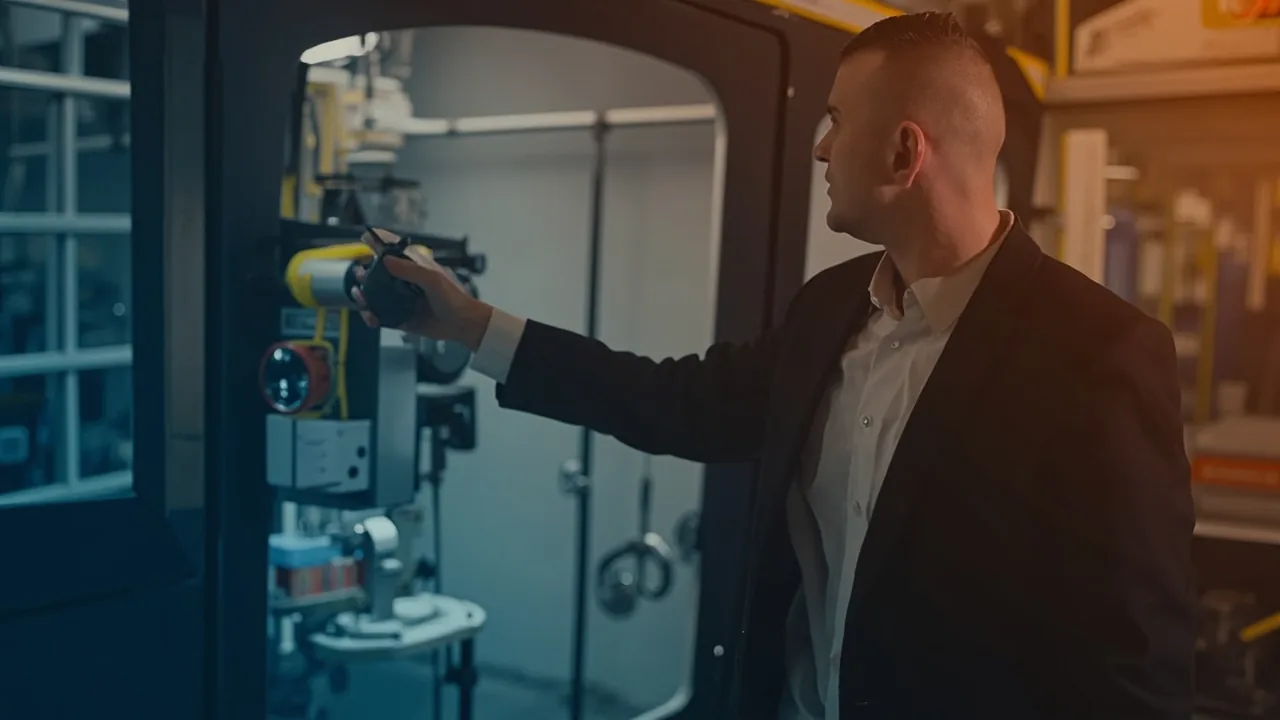
Financing High-Pressure Die Casting Machines

High-pressure die casting forces molten metal into a steel mould to make parts at scale, and financing the machine lets a Canadian manufacturer add capacity without draining reserves.
Die casting is central to making precision metal parts in Canada's automotive, aerospace, electronics, and industrial sectors. It produces complex shapes with tight tolerances and clean finishes, which makes it ideal for high-volume runs. The machines are among the most expensive equipment in manufacturing, so how you finance one matters for planning and growth.
Understanding High-Pressure Die Casting Machines
A high-pressure die casting machine forces molten metal into precision steel dies under very high pressure. That lets you produce thousands of identical parts with tight tolerances and little finishing. The machines run aluminum, zinc, and magnesium alloys, each with its own strengths.
Modern die casting machines have sophisticated hydraulics, advanced process controls, and increasing automation that raises output and reduces labour. They come in hot-chamber and cold-chamber designs, and cold-chamber machines are essential for aluminum and the other high-melting-point alloys common in Canadian shops. Knowing the difference helps you match the machine to your work, and the guide to equipment financing covers how to pay for it.
Why Financing Die Casting Equipment Makes Sense
Financing a die casting machine spreads the cost into monthly payments, often matched to your production revenue, instead of tying up capital that you would rather keep for operations, research, or growth. That helps when you are chasing a new contract or moving into a new segment.
Shops in Ontario, Quebec, and British Columbia have to keep modernizing to compete globally, and financing puts current technology within reach without draining the bank. Equipment loans and leases show up as liabilities, but they can be structured to keep your financial ratios healthy.
Equipment Leasing Versus Purchasing
The three ways to acquire a die casting machine are buying outright, leasing, and an equipment loan. The right one depends on your capital, your tax position, how fast the technology turns over, and your longer-term plan.
Leasing keeps working capital free and gets you a machine that might otherwise take years to save for. Many Canadian businesses also value the flexibility to upgrade before their equipment dates, given how quickly manufacturing technology moves.
The Cost of Die Casting Machines in Canada
The cost of a die casting machine in Canada depends mainly on tonnage, automation, controls, and whether it is new or used. Knowing the range helps you plan financing and judge a lender's quote. Currency matters too: most die casting machines come from Europe, the U.S., or Asia, priced in their own currency but paid in Canadian dollars.
| Machine size | Typical use | New price (CAD) |
|---|---|---|
| 200 to 500 tonnes | Non-automotive work | Roughly $100,000 to $350,000 |
| 500 to 1,000 tonnes | Automotive workhorses | Generally $300,000 to $800,000 |
| Over 1,500 tonnes | Structural automotive and industrial parts | $1.5 million or more |
At the top end, the size of the commitment is what drives the financing decision for many Canadian shops.
Financing Consideration
When you cost out a die casting machine, budget for installation, foundation work, auxiliary equipment, and initial tooling. These often add 15 to 25 percent of the machine price, so include them in your financing plan.
Benefits of Leasing Die Casting Machinery
The main benefit of leasing die casting machinery is a monthly payment shaped to your production cycle. That matters for shops with seasonal swings in agricultural, consumer-products, or construction-related work, because matching payments to income makes the slow months easier.
Lease terms usually run 24 to 60 months, longer on bigger packages. As the guide to how equipment leasing works explains, you can upgrade at lease-end and stay on current technology without a large capital outlay. In die casting, that is valuable because energy efficiency, automation, and process control keep improving.
Tax Advantages for Canadian Businesses
Operating lease payments are generally deductible as a business expense. The Canada Revenue Agency's guidance on leasing costs says to “Deduct the lease payments incurred in the year for property used in your business.” (CRA) That can beat depreciating owned equipment if you want to maximize near-term deductions. With a capital lease or a loan, you claim capital cost allowance plus interest instead. An accountant can confirm the best structure under current rules and your expected income.
Leased manufacturing equipment may also qualify for provincial incentives, depending on where you are and what you make. Programs from regional development agencies and industry initiatives can add to financing and lower your real cost. Quebec, Ontario, and British Columbia each run manufacturing support programs that may apply to a die casting investment.
Financing Solutions for Your Casting Operation
Equipment Leasing Canada finances die casting equipment for manufacturers in every province, from established companies upgrading a line to new operations setting one up.
An application for a die casting machine usually needs your financials: balance sheet, income statement, and cash-flow projections. Equipment Leasing Canada offers same-day quotes and fast approvals, since opportunities often won't wait.
Equipment Specifications and Financing Terms
Equipment Leasing Canada can finance a wide range of die casting configurations, hot- and cold-chamber, from small production units to machines over 3,000 tonnes. Whether it is a standard setup or a specialized machine with custom automation, the financing can match the spec and your delivery timeline.
You can also finance the supporting equipment: trimming presses, CNC machining centres for post-cast work, inspection systems, and material handling. Rolling several purchases into one agreement simplifies the paperwork and can get you a better rate on the total.
Getting Started with Equipment Financing
Getting started with die casting financing begins with a clear picture of your equipment needs and production goals. Pin down the machine specs, rough cost, and timeline so the financing supports the purchase instead of complicating it.
Equipment Leasing Canada finances manufacturers across the country, including Ontario, Quebec, British Columbia, Alberta, and Manitoba.
You can apply for equipment financing online. The form takes about ten minutes, and qualified businesses usually hear back within 24 to 48 hours. Equipment Leasing Canada works directly with suppliers and dealers, and it helps to discuss specs and delivery with your supplier's sales team early.
Ready to finance a die casting machine? Apply for equipment financing or estimate your monthly payment.
Frequently Asked Questions
How much does a die cast tool cost?
Roughly $15,000 to $50,000 CAD for a simple single-cavity die for a basic part. Multi-cavity dies for high-volume identical parts can top $100,000. Complex dies with intricate geometry, special alloys, or slides and cores can run $250,000 to $500,000 or more. Cost depends on part complexity, cavity count, and material, so include tooling in your overall financing plan.
What are the disadvantages of die casting?
Expensive tooling that locks you into a part design is the main one. The machine itself is a large capital outlay, and dies wear out and need replacing. The high-pressure process limits some geometries, so complex parts may need machining after casting. Holding quality also takes tight process control and skilled operators.
What is the price of a 2000 ton die casting machine?
A new machine of that size typically costs $1.5 million or more, in line with the price ranges above. Used machines cost less, depending on the maker, age, condition, and features. Either way, financing keeps working capital free.
Should I lease or buy die casting equipment?
It depends on your capital, how fast the technology turns over, and your long-term plan. Leasing frees capital and lets you upgrade as technology evolves. Buying can cost less over a long period of ownership and builds equity in the machine. Many Canadian manufacturers work through the total cost of ownership with an advisor before committing.
Share this article
Need Equipment?
Get approved for equipment financing in as little as 24 hours. No obligation application.
Get a Free QuoteOr call us directly
1-833-924-9554