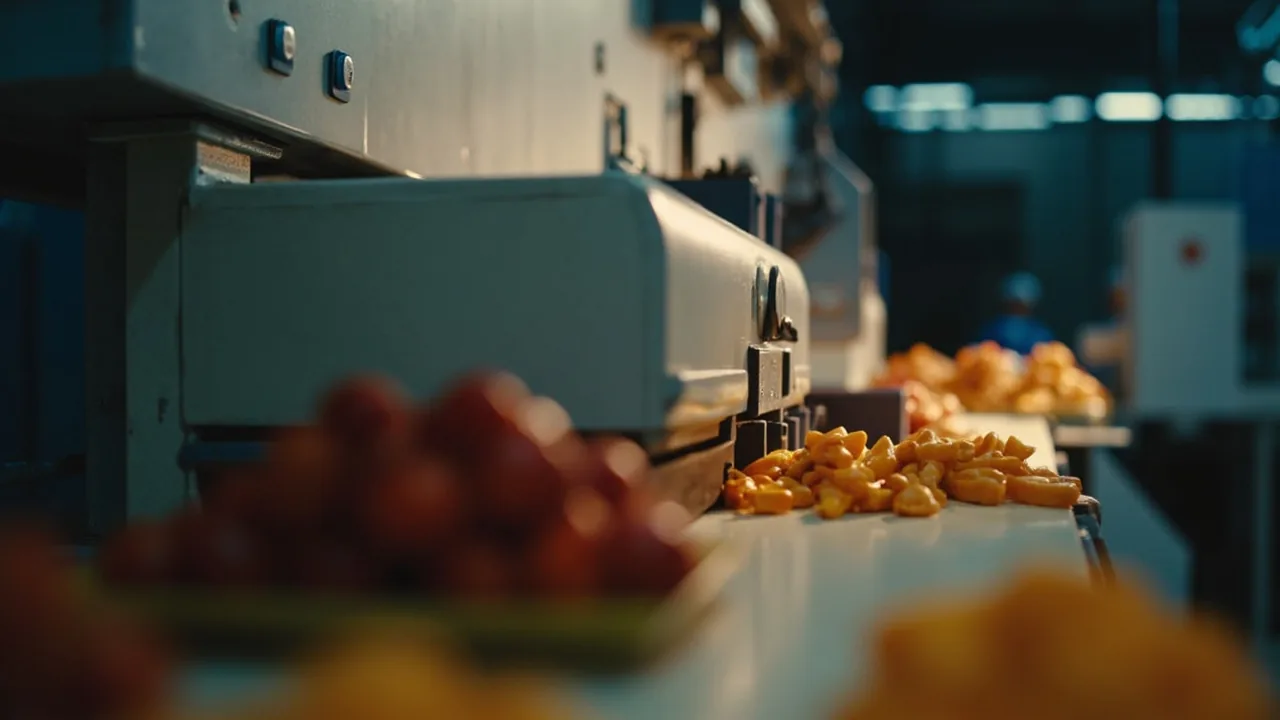

A processing line is where a food business either keeps up with orders or loses them, and financing a large one lets a Canadian processor add capacity without paying all at once.
Understanding Food Processing Equipment Financing in Canada
Food processing equipment financing spreads the cost of a line that can easily run into the millions. Food and beverage is one of Canada's biggest manufacturing sectors, employing hundreds of thousands from British Columbia to Newfoundland and Labrador, and a processing line for meat, dairy, baked goods, or vegetable canning is a major capital investment.
Financing this equipment takes knowledge of both the food industry and the financial side. A large processing line is not a standard equipment loan. It often needs flexible terms that account for long delivery and installation timelines, specialized upkeep, and the seasonal swings in the agricultural inputs feeding the operation.
Why Food Processing Businesses Need Specialized Financing Solutions
Food processing businesses need specialized financing because they deal with requirements a general lender may not understand. Facilities have to meet federal food-safety rules and provincial environmental requirements, and those standards shape both the equipment you choose and how you plan operations.
Traditional bank financing often falls short here. Banks tend to favour established companies with long histories and excellent credit. For a growing processor, especially in newer niches like craft beverages or organic food, conventional lending may not be flexible enough to scale the way you need.
Capital Intensity of Modern Food Processing
A modern line combines several technologies: automated sorting, precision temperature control, computer-vision inspection, and robotic packaging. A mid-scale setup might link mixers, ovens or refrigeration, conveyors, fillers, labellers, and quality-control instruments.
A full line that can produce thousands of units an hour costs anywhere from $500,000 to several million, depending on what you are making and how automated it is.
Types of Financing Available for Food Processing Lines
The main ways to finance a food processing line are leasing, an equipment loan, and a sale-leaseback. Knowing the options helps you choose one that fits your growth plan.
Equipment Leasing for Food Processing
Equipment leasing lets you use the equipment without buying it outright. The monthly payment is usually lower than a loan on the same equipment, so working capital stays free for operations. When the term is up, you can buy at fair market value, upgrade to newer technology, or return it.
Leasing suits food processing when technology moves fast or you need room to change your capabilities as the market does. The guide to equipment leasing goes into more detail.
Equipment Financing Through Loans
An equipment loan funds an outright purchase, with the equipment itself as collateral, which tends to earn a better rate than unsecured borrowing. For an established processor with strong credit, a loan is often the cheapest path to ownership.
The loan can also be matched to your cash flow. A seasonal operation might want payments tied to its production cycle, while a year-round plant might prefer a flat monthly payment.
Sale-Leaseback Arrangements
A sale-leaseback frees the capital locked in a line you already own. The financing company buys the equipment from you and leases it back, so you keep running the line while the cash goes into your account.
Canadian Tax Considerations
Under Canadian tax law, operating lease payments are generally deductible as business expenses. With a loan or capital lease, you claim capital cost allowance plus interest, and the CRA allows accelerated depreciation on certain manufacturing equipment through the Capital Cost Allowance system. An accountant who knows food processing can help you get the most from the available deductions.
Financing Considerations by Food Processing Sector
Financing considerations differ by sector. Knowing yours helps you and a lender build an arrangement that supports steady growth.
Beverage Processing Equipment
Beverage processing equipment includes brewhouses, fermenters, bottling lines, and kegging systems. Canada's craft beverage scene has boomed, with breweries, wineries, and distilleries opening across the country, and their equipment needs financing that accounts for long production timelines and the regulations around alcohol.
Beverage financing often has to allow for aging, since wine and spirits sit for years before they sell, plus the seasonal supply of raw materials. Flexible structures help a producer manage cash flow while inventory is aging rather than earning.
Agriculture-Focused Processing
Agriculture-focused processing plants turn farm output into finished products, linking Canadian growers to markets at home and abroad. They tend to face seasonal input supply and price swings that change working-capital needs through the year.
Financing for these plants should accommodate variable volumes and the need to process large quantities quickly when raw material arrives. Scalable capacity lets them handle harvest conditions without losing quality or efficiency.
Access to Capital for Growing Food Processing Businesses
Access to capital is what makes expansion possible, whether that means adding capacity, upgrading to more efficient technology, or opening a new plant in a different region. Equipment Leasing Canada works with food processing businesses across Canada.
Building a Financing Application
A strong financing application lays out the business, the exact equipment, and financial projections that show you can service the debt. A lender wants to see the line's expected output, the efficiency it adds, and its effect on the bottom line.
Credit history affects your options and your cost, but it is not the whole story. A newer business or one with a thin credit file can still get financing through structures that rely more on the equipment's value and your fundamentals than on a credit score alone.
The Financing Process for Processing Equipment
The financing process for processing equipment usually runs in six steps:
- Consultation to pin down your equipment needs, your situation, and your goals.
- Documents: financial statements, equipment specifications, and your business plan.
- Credit review. The lender reviews your credit and business profile to match you to the right structure.
- Proposal setting out terms, rates, and the payment schedule.
- Formal review and approval.
- Funding. The lender coordinates procurement of the equipment and releases the funds.
Growing Your Food Processing Business in Canada
Growing a food processing business in Canada means keeping up as consumer tastes change, food-safety standards evolve, and technology reshapes how plants operate. The companies that can get the equipment to keep up are the ones that hold their edge, whether they are expanding a line, modernizing old equipment, or building a new plant.
For background, see the guides to equipment financing and how equipment leasing works.
Ready to finance your processing line? Apply for equipment financing or estimate your monthly payment.
Frequently Asked Questions
What credit score is needed to finance food processing equipment in Canada?
There is no single minimum score. Stronger credit gets the best rates and terms, but a thin file or a lower score does not rule you out. Lenders can use alternative assessments that weigh the equipment's value, your revenue, and your overall financial health rather than a credit number alone.
How long does it take to get approved for food processing equipment financing?
It depends on how complex the request is and how complete your file is. A clean application for standard equipment can be approved in days, while a bigger or unusual one, such as multiple machines or a complicated situation, takes longer. Sending complete documentation up front speeds it up.
Can I finance used food processing equipment in Canada?
Yes, though the terms may differ from new. Lenders weigh the condition, remaining life, and resale value. Used equipment can suit a business entering the industry, expanding into a new product, or keeping capital spending down while maintaining output.
What happens if my food processing business grows and I need to upgrade equipment before the financing term ends?
You can often upgrade. Depending on the structure, you might amend the lease, pay out the existing financing early to acquire new equipment, or restructure to fit changing needs. Mention your growth plans when you apply so the arrangement can allow for them.
Share this article
Need Equipment?
Get approved for equipment financing in as little as 24 hours. No obligation application.
Get a Free QuoteOr call us directly
1-833-924-9554