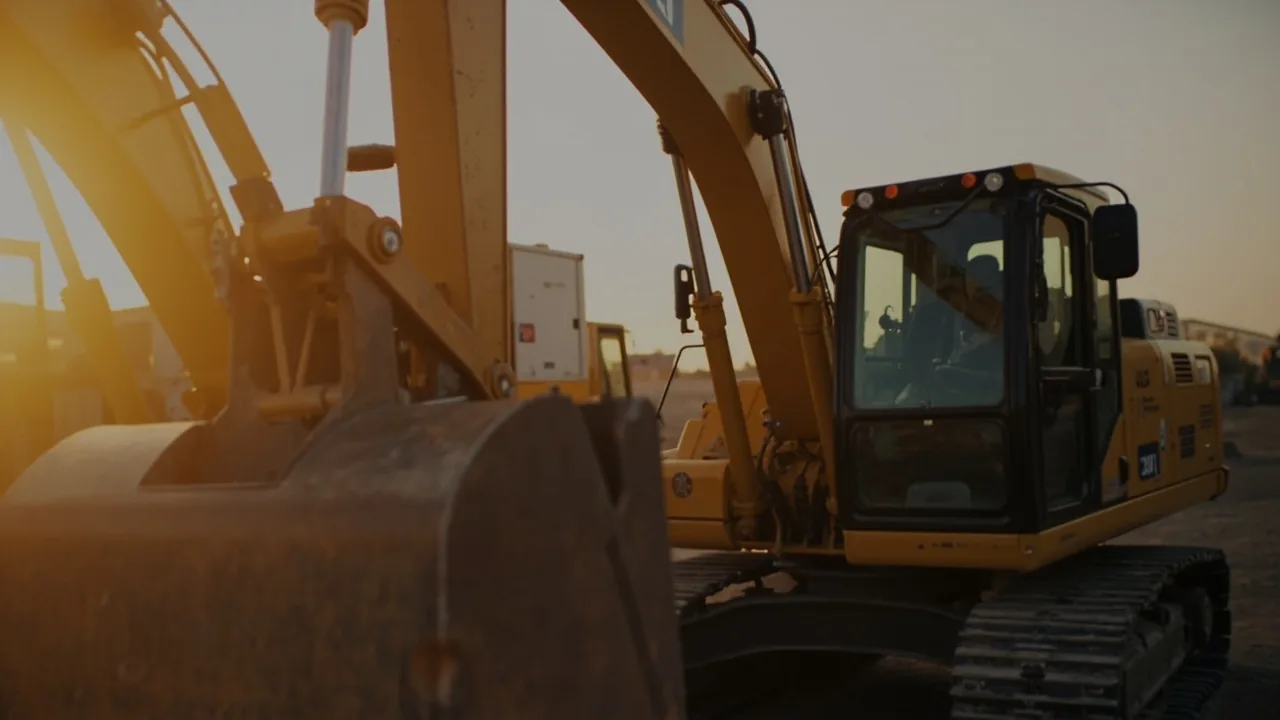

Leasing a large hydraulic excavator, a 20- to 90-tonne machine for major builds, quarries and municipal work, lets a Canadian contractor put one on the job without paying the full price up front. For many contractors, it is the cheapest way to get one.
Whether you are moving earth, working a mine, or building major infrastructure, the excavator is the workhorse of most heavy builds, and it can make or break the schedule and the budget.
What is a Hydraulic Excavator?
A hydraulic excavator is a heavy machine that uses pressurized fluid to drive its boom, arm, and bucket. It digs, trenches, and moves large volumes of earth and rock with considerable precision. The hydraulics let an operator run several functions at once and keep the motion smooth.
Large hydraulic excavators weigh anywhere from 20 to 90 tonnes, which puts them on major builds, quarry work, and municipal jobs. Weight drives almost everything else, including how deep the machine digs, how much the bucket holds, and how much it can lift, so picking the right model for the work matters.
Why Lease Rather Than Buy Heavy Equipment?
For most Canadian businesses, leasing instead of buying comes down to cash. Buying an excavator outright, new or used, ties up capital you could use elsewhere. A lease keeps that money free while still getting the machine on the job.
Leasing also tends to skip the large down payment, which helps a smaller contractor or a company breaking into a competitive market like Toronto, Vancouver, or Calgary. On the tax side, operating lease payments are generally deductible as a business expense under the Income Tax Act. The Canada Revenue Agency's guidance on leasing costs says to “Deduct the lease payments incurred in the year for property used in your business.” (CRA) With a capital lease or a loan, you claim capital cost allowance plus interest instead.
There is a currency factor, too. When the Canadian dollar falls, imported equipment costs more to own. Financing through a Canadian company avoids the cross-border complications while still giving you current technology.
How Excavator Lease Terms Work
Excavator terms come in a few structures, each suited to a different job length. A short equipment rental runs daily to monthly, which is handy for emergency work or a quick build. A lease usually runs 12 to 60 months, giving you steady access while you spread out the cost.
Match the commitment to your pipeline. If you have steady contracts with a city or a large developer, a longer term brings stability and a payment you can plan around. For seasonal work or a one-off job in Northern Ontario or the B.C. interior, a short rental fits better.
Equipment Leasing Canada structures agreements with businesses in every province to match how they work, whether that is a three-month infrastructure push or a five-year run of continuous operations.
Choosing the Right Size Excavator for Your Project
The right size excavator is the one that matches the scope of the work. The 50-tonne-plus class is built for heavy earthmoving, mining, quarrying, and large commercial builds, with digging depths past six metres and buckets that move hundreds of tonnes an hour.
Consider these factors when choosing:
- The depth and width of the trenches you need to cut
- The material you are digging through and the soil common in your region
- The lifting you need, such as setting pipe, foundations, or other heavy pieces
- Site access, since tight urban lots change the answer quickly
- Moving the machine between jobs, because hauling a large excavator is its own logistics problem
For precise work in tight quarters, mini excavators may have a place in your plan. When the job demands power and capacity, the large hydraulic excavator is still the standard on Canadian sites, in heavy construction and landscape work alike.
Attachments That Expand Your Excavator's Capabilities
Attachments let one leased excavator handle many tasks, so you do not need separate equipment for each.
Hydraulic hammers break concrete, rock, and frozen ground, which matters in a Canadian winter. Grapples and thumbs speed up demolition and sorting. Buckets range from standard dirt buckets to reinforced rock buckets with hardened teeth, each suited to a different material.
Add shears for cutting metal during demolition and a compaction wheel for prepping utility trenches, and the machine covers most of a job site on its own. Before you sign the lease, confirm with the dealer that the model is compatible with the attachments your work needs.
Pro Tip for Canadian Contractors
Before you sign, confirm the machine meets Canadian safety standards and emissions rules. Several provinces require equipment to pass inspections before it runs on public works. Check compliance with the dealer so government contracts go smoothly.
Operating Large Excavators Safely and Efficiently
Operating a large excavator takes proper training and certification. In Canada, operators should hold the right credentials, and occupational health and safety law makes the employer responsible for ensuring only qualified people are at the controls. That matters even more on a crowded site where machines work close together.
A reputable dealer supplies the machine well maintained and inspected. That lowers the chance of a breakdown stalling your job and means the hydraulics, controls, and safety systems are working properly. The agreement spells out who handles maintenance during the term, so a repair bill does not catch you by surprise.
Efficiency also depends on matching the machine to the conditions. A large excavator working through a Canadian winter may need cold-weather hydraulic fluid and a block heater. Ask the dealer to set the unit up for your climate before it goes to work.
How Do You Apply to Lease an Excavator?
Applying to lease heavy equipment is now fairly simple. It usually means sharing basic business details, describing what you need, and providing enough financial information to show you can make the payments.
Approval moves faster if you have your incorporation papers, recent financial statements, and business banking details ready. Leasing companies work with sole proprietors in Manitoba, corporations in Quebec, and partnerships spread across provinces.
Ready to lease an excavator? Apply for equipment financing or estimate your monthly payment.
Comparing Lease Options for Your Business
Lease structures differ, and the differences matter. A fair market value lease tends to carry a lower monthly payment, with the option to buy the machine at the end for what it is then worth. A dollar-out lease lets you buy it for next to nothing when the payments finish, which suits you if you plan to own it long term.
An operating lease lets you return the machine at the end with no obligation to buy, which is useful if you expect to want newer technology in a couple of years. A capital lease works more like financing and can let you build equity as you go.
Your cash flow, your tax situation, and your longer-term equipment plans decide which structure fits. A conversation with a financing specialist who knows Canadian businesses can help you avoid the wrong one.
Frequently Asked Questions
What is the average monthly cost to lease a large hydraulic excavator in Canada?
Monthly payments run from a few thousand dollars to more than ten thousand, depending on the machine's size and age, the term, and your credit. Weekly rates are available for shorter needs. Your actual quote depends on your equipment and your finances.
Do I need special insurance to lease heavy construction equipment?
Yes. Most agreements require liability coverage and physical damage coverage on the leased machine. Work with an insurer who knows commercial equipment so you are properly covered for the whole term.
Can I lease multiple excavators under the same agreement?
Yes. Many contractors lease a whole fleet under one agreement, which keeps the paperwork simple and can improve the overall rate. Equipment Leasing Canada can structure one agreement for several large excavators on one job or a mix of sizes for different tasks.
What happens if my excavation project is completed before the lease ends?
That depends on your agreement. Most spell out early termination, but buyout and return terms differ by provider. Some let you switch to different equipment if your needs change, while others set specific rules for early settlement. Go through these scenarios with your provider before signing.
For more background, there are guides to equipment leasing and how equipment leasing works across different industries.
Share this article
Need Equipment?
Get approved for equipment financing in as little as 24 hours. No obligation application.
Get a Free QuoteOr call us directly
1-833-924-9554