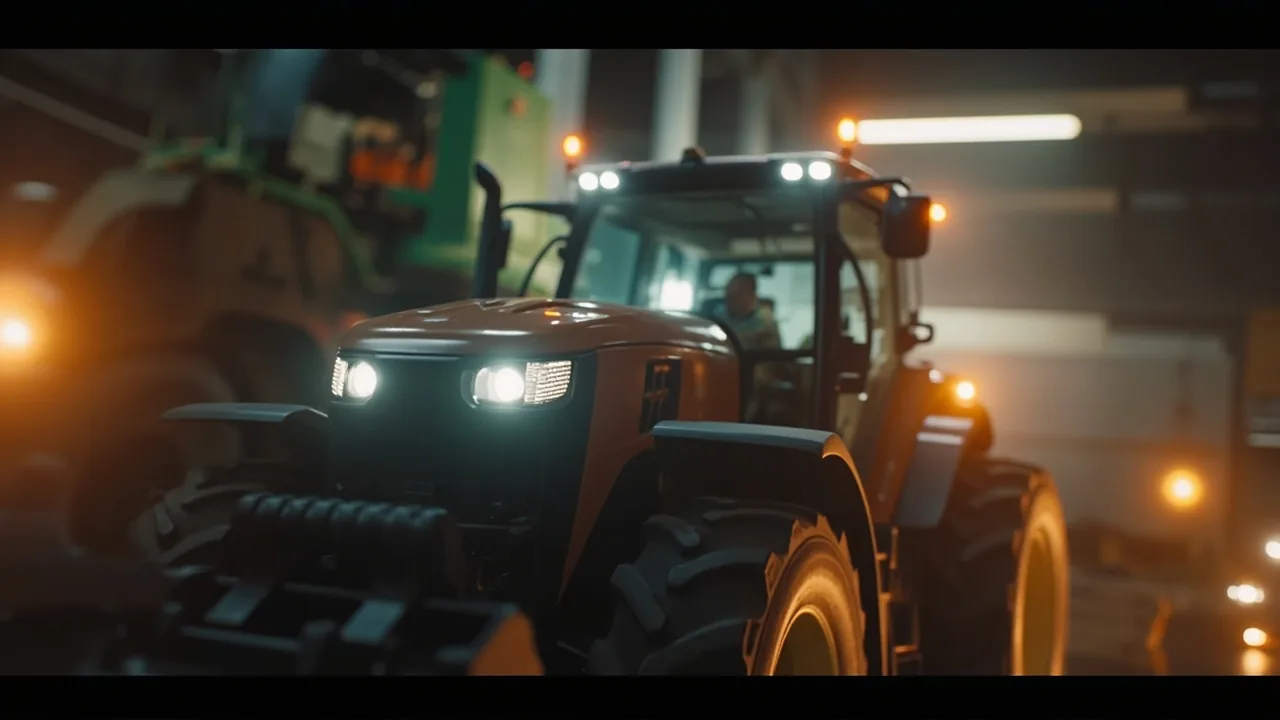

Leasing a high-horsepower tractor, 250 to 300+ HP, lets a Canadian farm run a machine that can cost more than $500,000 new without paying for it up front.
A tractor in the 300-horsepower range or beyond is expensive. A new high-horsepower machine can clear $500,000, and even a quality used one runs well into six figures. If you want to grow, add to the fleet, or get current technology without draining working capital, a lease is a strong alternative to owning. Farm Credit Canada points out that “Leasing can be less expensive and simpler than buying since lease payments are often less than loan payments.” (FCC)
Understanding High-Horsepower Tractors in Canadian Agriculture
A high-horsepower tractor usually means one rated at 250 HP or more, though many people draw the line at 300. These machines carry large Canadian operations, especially on the Prairies, where the fields are wide and the planting and harvest windows are short. They pull broad implements, hold field speed, and work soil that would stall anything smaller. On a Saskatchewan grain farm, that capability can decide whether the crop goes in on time or the weather decides for you.
GPS auto-steer, variable-rate seeding, fleet telematics, and advanced hydraulics are now standard on premium models. That technology pays its way through reduced input costs, tighter field coverage, and a steady stream of data you can act on. It also raises the price considerably, which makes the buy-versus-lease decision harder than it used to be.
The Financial Case for Leasing Over Buying
The case for leasing rests on cash flow today and the tax and operating picture later, not just a comparison of two monthly payments. Owning builds equity, and holding title has its appeal. But a lease has advantages that often outweigh keeping an asset that loses value every season.
Preserving Working Capital for Farm Operations
Working capital is what carries a farm through its uneven cash flow. The season demands money up front for seed, fertilizer, fuel, and labour, long before a single bushel sells. Put half a million into a tractor and that capital is gone, money that could have funded those inputs or stood as a cushion against the next hailstorm. A lease spreads the cost across the growing season, so payments line up with revenue.
Equipment Leasing Canada structures lease agreements around how farms run, with terms that fit the season. Instead of drawing down savings or a line of credit, you can put those dollars into inputs and improvements that directly increase yield. The return on that spending often exceeds the cost of the lease, which is why lease financing suits a growing operation.
Tax Advantages for Canadian Lease Arrangements
The Canada Revenue Agency has clear rules on how leased equipment is treated. Under current CRA guidance, operating lease payments on qualifying farm equipment are generally deductible as a business expense, which reduces your taxable income. The payments work like an operating cost rather than a capital asset, which can give you larger deductions in the early years than the depreciation on a purchase. The Canada Revenue Agency's guidance says to “Deduct the lease payments incurred in the year for property used in your business.” (CRA)
If you buy with a loan, or use a capital lease, you claim capital cost allowance plus interest, which spreads the deduction across years. For a farm that wants a lower tax bill, an operating lease often wins on after-tax cost over the machine's life. The numbers vary with your structure, your province, and other details, so talk to a tax professional before you commit either way.
Choosing the Right High-Horsepower Tractor for Your Operation
The right high-horsepower tractor is one whose capabilities match your needs. The best tractor for a large Saskatchewan grain farm is not the best one for a mixed operation in Ontario. Look closely at your main jobs, your typical field conditions, the implements you pull, and the ground you cover.
Engine Power and Performance Specifications
These machines run from roughly 250 HP at the low end to more than 600 HP for the heaviest work. Don't focus on the peak number alone. Torque curves, hydraulic capacity, and three-point hitch specs decide how much of that power reaches the ground. Draft control, PTO output, and transmission efficiency all shape field performance, and they differ meaningfully between makes and models.
Most modern diesel engines have management systems that raise output when the job calls for it, giving you a boost above the base rating when you run PTO-driven implements. Knowing how that works across your usual tasks helps you choose a tractor with enough reserve for the hard days. If you farm heavy clay or hilly ground, that reserve matters more than the brochure suggests.
Cab Comfort and Technology Integration
The cab is where an operator spends long hours through planting and harvest. Suspension, climate control, and noise reduction can make the difference between a sharp operator at hour ten and a tired one making mistakes. Look closely at the cab on any machine you expect to run hard during a time-sensitive stretch.
ISOBUS compatibility lets the tractor communicate with implements from other brands, while precision systems handle variable-rate work, automated guidance, and detailed field mapping. These features feed directly into your return on the lease, so a well-equipped machine is worth the premium for an operation focused on efficiency and data.
Planning Your Tractor Lease in Canadian Dollars
When you budget a high-horsepower lease, look past the monthly payment to fuel, insurance, and how maintenance is handled. Terms usually run 36 to 60 months. Equipment Leasing Canada quotes rates in Canadian dollars with payment structures designed for farming, based on the machine you want and how you operate.
Leasing Process for Agricultural Equipment
Leasing a tractor through Equipment Leasing Canada follows a clear path. From first inquiry to delivery, it usually takes two to four weeks, depending on how complex the financing is and what the dealer has on the lot. Knowing the steps lets you prepare your paperwork in advance.
Application and Approval Steps
The first step is the application: some information about your farm, the machine you want, and the terms you are after. We assess it on business viability, credit history, and how long the tractor will stay useful. An established operation with solid books tends to be approved quickly. A first-time applicant, or a farm with an unusual setup, may need to provide more.
Expect to provide business registration, financial statements or tax returns that show income, and the specs of the machine you plan to lease. For a farm, that often means acreage, your usual rotations, and the equipment you already run. The purpose is to confirm the operation can carry the payments while keeping enough cash on hand to keep running.
Equipment Selection and Delivery
Once you are approved, you confirm the specs and available inventory with the dealer. A wide range of brands build tractors in this class, with dealers across farm country from B.C. to Atlantic Canada. Lead times vary with the spec, demand, and your location. A popular configuration might ship soon, while a custom build can take months.
Dealer service deserves as much weight as the machine itself, especially if you farm somewhere remote on the Prairies. A nearby technician, parts in stock, and solid warranty backing protect the lease for its whole term. Look for a brand and dealer network that balances the performance you want against the support you can actually access.
Maintenance and Support Considerations
Maintenance on a leased tractor is handled differently from lease to lease. Some put it on you, while others include a service package or a dealer agreement. Confirm which one you are signing so the budget holds no surprises.
Preventive work, such as fluid changes, filters, and routine inspections, protects uptime and catches wear before a breakdown hits in the middle of harvest. Many farms build a relationship with a local dealer who knows their machines and can respond quickly when something goes wrong. That relationship pays off in planting and harvest season, when a day of downtime is a day of lost crop.
Warranty Coverage and Extended Protection
A new machine usually comes with a manufacturer warranty for a set period of time or hours, covering defects and component failures and making early repair costs predictable. When you lease, the warranty often runs with or past the lease term, so you stay covered throughout.
Some leases also offer extended coverage or a protection plan beyond the base warranty. That can be worth it for a farm in tough country or one putting on heavy annual hours. Weigh the cost against your conditions.
End-of-Lease Options and Considerations
At the end of the lease, you can usually buy the machine, return it, or move into something newer. It pays to know these options going in, so you can line the decision up with where the farm is headed.
Purchase Options and Fair Market Value
Many agreements let you buy at the end, either at a price set in advance or at fair market value on the day. A fair-market-value lease gives you room to choose: buy the tractor if it is worth more than the option price, or walk away if it is not. That flexibility is valuable when technology keeps advancing and today's machine can date quickly.
For most Canadian farms, the decision to buy or return comes down to the machine's condition, the life left in it, and whether something newer would make a real difference. Some operations move from lease to lease and always run current equipment. Others prefer to build equity, especially when they expect to run a particular setup for years.
Applications for High-Horsepower Tractors Across Canadian Agriculture
High-horsepower tractors are used across the sector, and the right power class depends on the job. Common uses include:
- Prairie grain farms use them for primary tillage, seeding, and harvest across large acreages with no room to lose a day.
- Mixed operations use them for varied work, from forage and hay to supporting the livestock side of the farm.
- Large commercial operations use wide implements that reduce field passes and make the most of every labour hour.
- Specialty crop growers run them on handling and processing equipment that needs strong PTO or hydraulic power.
Implements make these machines versatile, letting one tractor do the work of several. From heavy tillage to specialized seeding equipment, there is an attachment for nearly any job on a Canadian farm. When you lease, look beyond the tractor's own specs to the implements you plan to run, and make sure it has enough power, hydraulic flow, and hitch capacity for all of them.
Tips for Canadian Businesses Considering Tractor Leases
A few things are worth thinking through before you sign a tractor lease:
- Calculate the true cost of ownership: payments plus maintenance, insurance, and fuel, so you can tell whether the lease beats a rental or an outright purchase.
- Estimate your hours honestly. A high-hour operation often needs a different structure than a lighter one.
- Check dealer support in your region, because timely repairs are critical when the season is short.
- Know your end-of-lease options before you commit. They shape both the economics now and your equipment plan later.
- Consult a tax and financial advisor to confirm how the payments are treated and which structure fits your situation.
Equipment Leasing Canada finances tractors for Canadian farms, from large grain operations in Saskatchewan to diversified farms in Ontario, with leases structured around the farming cycle.
Ready to lease a high-horsepower tractor? Apply for equipment financing or estimate your monthly payment.
Frequently Asked Questions
What credit score is needed to lease a high-horsepower tractor in Canada?
There is no single required score. Business revenue, time in operation, and how you plan to use the machine all count. Stronger credit improves your odds and your rate, but a moderate score can still be approved if the rest of the application is solid, especially for a farm with a track record and steady revenue.
Can startups or new farm operations lease high-horsepower tractors?
Yes, though a new operation may face tighter terms or a larger down payment than an established one. Depending on the details, that might mean extra documentation or a co-signer. Once the business shows it is viable, better terms tend to follow.
What happens if the tractor requires major repairs during the lease term?
You usually handle it, unless the lease includes maintenance provisions or a warranty applies. Keeping up your service relationships and dealing with problems quickly limits downtime and keeps the machine in good shape for its return. Some leases include maintenance packages or extended warranty options that make unexpected repairs easier to budget for.
Is it better to lease or finance a high-horsepower tractor for tax purposes in Canada?
It depends on your situation. Operating lease payments are generally deductible as a business expense, while a purchase financed with a loan, or a capital lease, lets you claim capital cost allowance plus interest over several years. The after-tax comparison turns on your marginal rate and long-term plans, so talk it through with a qualified tax advisor.
Share this article
Need Equipment?
Get approved for equipment financing in as little as 24 hours. No obligation application.
Get a Free QuoteOr call us directly
1-833-924-9554