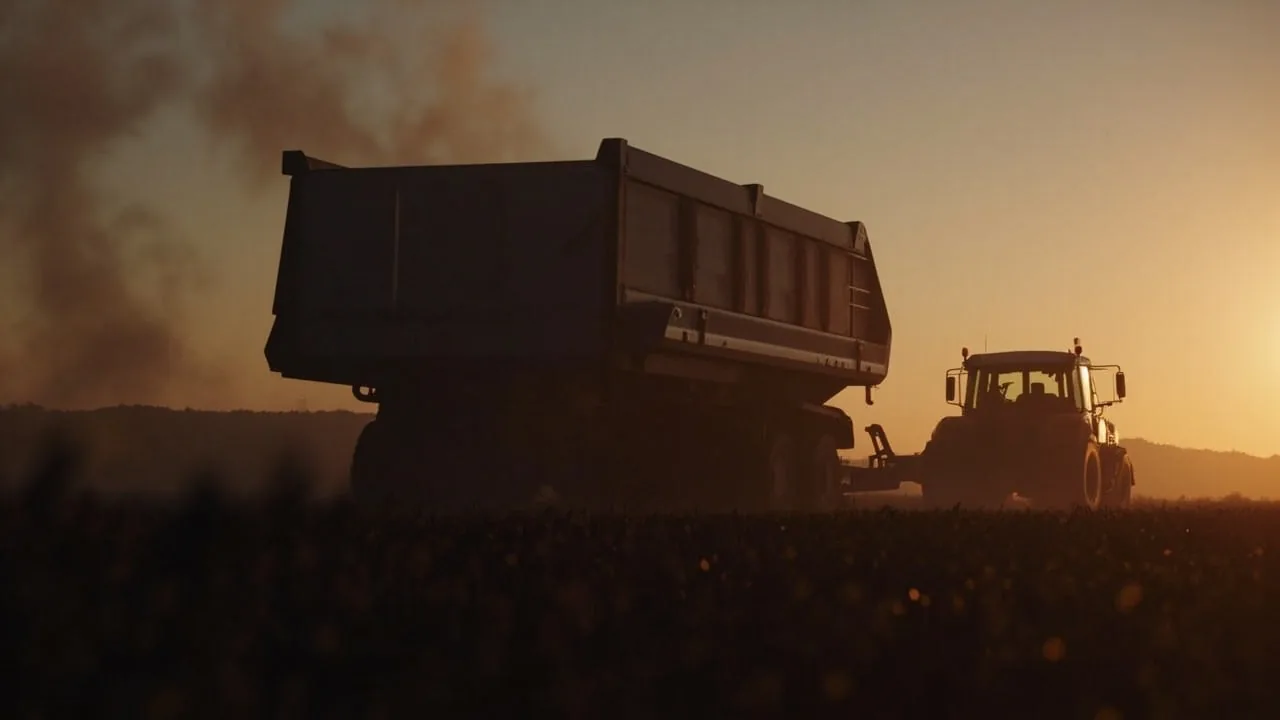

A large manure spreader turns livestock waste into evenly applied fertilizer across hundreds of acres, and leasing one puts the machine on a Canadian farm right when the spreading window opens. You get that timing without locking up your capital.
Understanding Manure Spreaders in Canadian Agriculture
A manure spreader is the machine that turns livestock waste into fertility a crop can use, and it earns its keep on livestock operations from the Saskatchewan grain belt to the dairy country of Ontario and Quebec. The job is easy to describe and hard to do well. Whether you run cattle in Alberta, hogs in Manitoba, or poultry in B.C., getting the application right keeps both your yields and your compliance on track.
Spreaders are not one-size-fits-all. A small herd needs a modest machine, while a 700-cow dairy needs one that empties fast and spreads evenly. For most farm owners the sticking point is not the brand on the hopper but the cheque. Buying a high-capacity unit outright ties up money the operation could put to better use.
Most Farms Don't Need to Own a Spreader
Leasing or renting solves a problem that ownership creates: a spreader that sits idle. Spreading is seasonal work. A cattle operation in Saskatchewan might run flat out through spring prep and again at fall cleanup, then leave the machine parked for months. Paying to own a machine that idle rarely makes sense.
A short-term arrangement adapts where a purchase can't. If your herd grows or your rotation shifts, you move up to a bigger unit next season, with no resale, no listing, and no haggling with a neighbour over a used machine. That flexibility matters in farming, where commodity prices and program rules seldom stay the same two years running.
It also helps newer operations. A beginning farmer, or a family partway through a generational handover, can put professional-grade equipment to work without the down payment a purchase demands. Financing a major machine is difficult while you are still building credit, and a rental avoids that hurdle.
The Financial Case for Leasing Manure Spreaders
Leasing keeps your working capital free for seed, an irrigation upgrade, or whatever else earns its keep this year, which is why many Canadian farm businesses now lease. When prices drop or an unexpected repair bill arrives, that liquidity carries you through. Farm Credit Canada notes that “Leasing can be less expensive and simpler than buying since lease payments are often less than loan payments.” (FCC)
There is a tax angle too. Operating lease payments are generally deductible as a business expense, while with a capital lease, a loan, or a purchase you claim capital cost allowance plus interest. The Canada Revenue Agency's guidance on leasing costs says to “Deduct the lease payments incurred in the year for property used in your business.” (CRA) Run the specifics past your accountant, since every operation's books differ.
The real cost of owning also runs well past the sticker price. Add maintenance, repairs, insurance, and the money you can't use elsewhere while the asset depreciates in the shed. A well-structured lease folds most of that into one predictable monthly payment.
Manure Spreaders Come in Three Main Types
Manure spreaders fall into three main categories, and knowing them helps you match the machine to the job:
- Box units have a rectangular hopper and rotating beaters. They handle solid and semi-solid loads and pair with a wide range of tractors.
- Tandem-axle models carry heavier loads for bigger operations.
- Nurse tanks handle liquid, which matters in dairy and hog country where slurry is the norm.
Box models are the workhorses. They take solid or semi-solid material and run off common horsepower ratings, and newer ones spread far more evenly than older machines. That even pattern helps with both nutrient placement and the regulations you answer to.
Capacity Considerations for Canadian Operations
Capacity is measured in tons or cubic feet, and the right number depends on herd size, acreage, and how fast you need the job done. A smaller operation can usually work with 10 to 15 tons. A large dairy or feedlot wants 20 tons or more per load, to cut passes and finish before the weather turns.
Match the horsepower. A big hopper needs a tractor that can pull it loaded, and a mismatch invites breakdowns and an uneven spread. A good dealer sizes the unit to the tractors you already run rather than selling you more machine than your fleet can handle.
What to Expect When You Lease or Rent a Spreader
A spreader you lease through Equipment Leasing Canada comes from the dealer, who inspects and services it so it is ready to work. That reliability matters. When the field is finally fit and the forecast is against you, a breakdown on one of your few good days is costly.
Rental terms from dealers and rental companies follow the work: day rates, weekly rates, or a seasonal arrangement. A short burst of intensive spreading suits a quick rental. Spreading across several seasons usually costs less per acre on a longer commitment, such as a lease. Work through the timeline with your financing specialist to find the cheapest option for your calendar.
Logistics depend on where you farm. Some dealers include delivery and pickup in the price; others have you collect the machine. If you farm in northern Manitoba or remote Saskatchewan, include hauling in your numbers, because freight can change the total more than the day rate does.
Planning Tip
Book early. Spring and fall are when every operation wants a spreader, and the right size goes first. Line up your machine ahead of the rush so you get the unit you need, not whatever is left on the lot.
Leasing vs. Renting: Choosing Your Approach
Leasing and renting are not the same thing, though people often use the words interchangeably:
| Renting | Leasing | |
|---|---|---|
| Length | Usually short, paid by the day, week, or month | Longer, often one to five years |
| Built for | Seasonal or one-off jobs | Spreading several times a year |
| End of term | Return the machine | Often a choice to buy the machine or hand it back |
For a spreader, the deciding question is how often you will run it. If you spread several times a year across a few hundred acres, a lease tends to win on value and predictability. If you spread only occasionally, or are still working out which configuration fits, a short rental lets you try a machine before you commit to ownership.
Equipment Leasing Canada arranges the lease and financing side, so you can structure payments around the work. Your acreage, herd size, how often you spread, and where you want the operation in five years all point to which option fits.
Environmental Compliance and Manure Management
Environmental compliance is now a bigger factor in choosing a spreader, because regulators watch how manure is applied more closely than they used to. The rules vary by province, from Alberta's Agricultural Operations Practices Act to Ontario's Nutrient Management Act and Manitoba's phosphorus-zone proposals. Learn your province's standard before you choose, because it sets the precision you need.
Newer machines help you meet those standards. Rate controls, GPS for variable-rate application, and pattern monitors that keep coverage even all put nutrients where the crop needs them and help you avoid the over-application that causes runoff and groundwater concerns.
Leasing gives you that current technology, compliance features included, without buying it outright. As the rules change, you are not left running an older machine against a newer standard.
Ready to lease a manure spreader? Apply for equipment financing or estimate your monthly payment.
Making the Most of Your Equipment Investment
Getting value from a spreader, whether rented, leased, or bought, comes down to running it properly and looking after it. Learn its capacity and limits before you start. Overloading a spreader risks more than a fine: it risks a breakdown that costs you days and money at the worst possible time.
Follow the manufacturer's maintenance schedule between jobs, and report any issue to your dealer early, while it is still small. Looking after rented or leased equipment means it is ready when you need it next, and you avoid damage charges.
Finally, fit your spreading into a broader nutrient plan. Work with an agronomist to set agronomic rates, so the machine becomes one well-aimed tool in a strategy. That is how the investment, owned or not, pays you back.
Frequently Asked Questions
How much does it cost to rent a manure spreader in Canada?
Smaller units might run 200 to 300 dollars a day, and commercial machines that hold 15 to 20 tons a load can cost 500 to 800. Weekly and seasonal rates bring the per-day cost down considerably. Ask a dealer or rental company for a quote on your actual job rather than relying on a ballpark.
What size manure spreader do I need for my farm?
It depends on herd size, acres, and how fast you need to finish. Smaller operations typically run 8 to 15 tons, and bigger operations move into the 15 to 25 ton range. Check your tractor too, since a large hopper needs matching horsepower.
Are lease payments tax deductible for Canadian farmers?
Yes, for an operating lease. Operating lease payments on equipment used in the business are generally deductible as a business expense in the year you pay them. With a capital lease, a loan, or a purchase, you claim capital cost allowance plus interest instead. Confirm the details with an accountant who knows farm taxation before you file.
Can I lease a manure spreader with the option to buy?
Yes. Equipment Leasing Canada writes leases that end with a purchase option, and a finance lease can put part of what you have already paid toward the final price. It is a low-risk way to run the machine through a full season before you decide to own it, which matters on a purchase this size.
Share this article
Need Equipment?
Get approved for equipment financing in as little as 24 hours. No obligation application.
Get a Free QuoteOr call us directly
1-833-924-9554