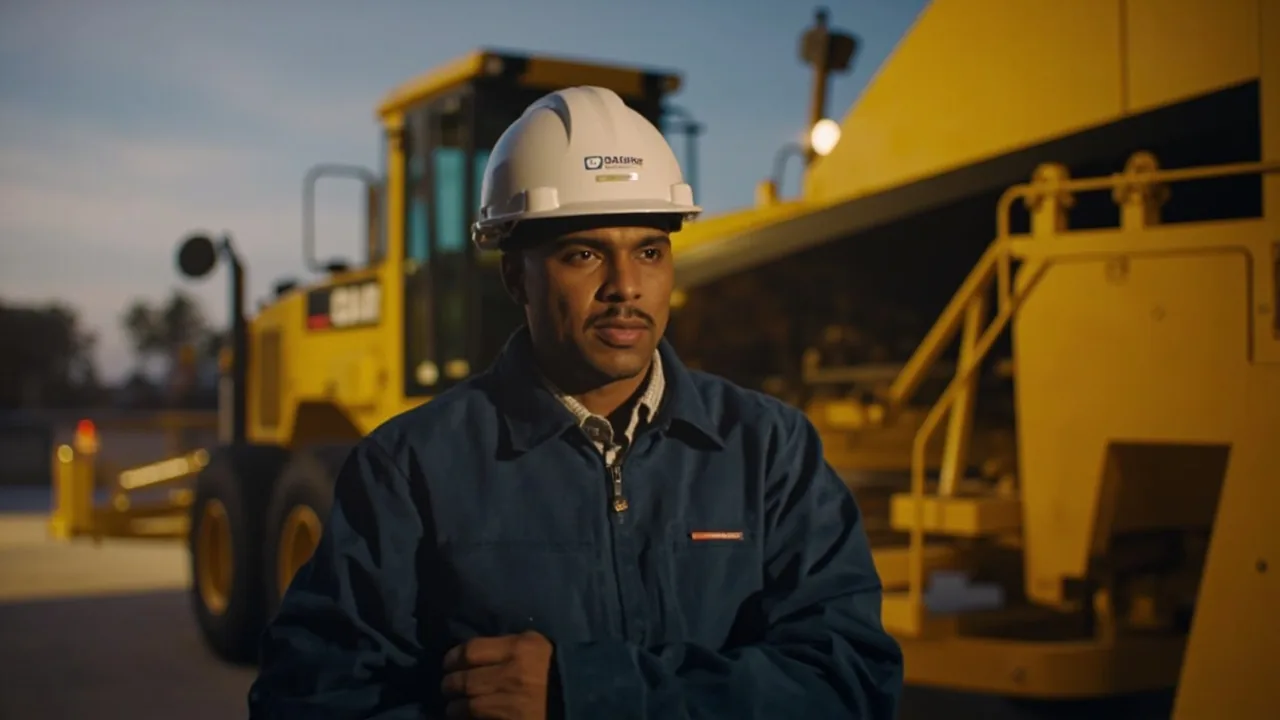

A motor grader carries a long blade slung between its axles to cut roads flat and true, and leasing one lets a Canadian contractor take on grading work without the cost of ownership.
When a job calls for a smooth, precisely graded surface, whether a highway, a municipal road, or an infrastructure build, the motor grader is the machine that does it. Its long blade and fine control make it the backbone of road work across the country.
What is a Motor Grader?
A motor grader is a heavy machine with a long blade slung between the front and rear axles, usually on an articulated frame driven by a diesel engine. The blade tilts, angles, and pitches to cut flat surfaces, setting the drainage and smooth finish a roadbed needs. That adjustability lets it meet the exact grade specifications Canadian road construction demands.
Newer units have an enclosed, climate-controlled cab with good sightlines, so an operator can work through a Saskatchewan cold snap or a mild B.C. season in reasonable comfort. The cab usually rides on a suspension that reduces fatigue over long shifts.
Most of the machine's versatility comes from the blade. With the right blade configuration and accessories, a grader moves earth, shapes slopes, pushes snow, and fine-grades a sub-base. That is why road crews, contractors, and municipal public works teams rely on graders year-round.
Why Lease a Motor Grader for Your Road Work Project
Leasing a motor grader gets you a well-maintained machine without the large cheque ownership demands, which keeps cash free for payroll and the costs that turn up mid-season. Many Canadian contractors already lease heavy equipment instead of buying it.
Leasing also avoids the long-term risk of owning. Construction technology moves fast, and a machine that is current today can look dated in a decade. A lease lets you run current models, with better fuel economy, more operator comfort, and more precise controls, without worrying about depreciation or resale.
It is flexible, too. Jobs vary, and scaling your fleet up or down with demand keeps money from sitting idle. Whether you have one municipal contract or a run of provincial work, a lease can be structured to fit the timeline.
Motor Graders Come in a Wide Range of Sizes
Motor graders come in a wide range of sizes, and matching the machine to the job saves money. Highway expansion in Alberta, municipal repairs in Ontario, and infrastructure work in Quebec each call for a different fit.
Small to Mid-Size Motor Graders
Small and mid-size motor graders usually weigh between 10,000 and 18,000 kilograms. They turn tightly and handle cramped sites, which makes them a good choice for urban work, subdivisions, and maintenance in tight spaces. For most Canadian grading jobs, this range offers the best balance of power and precision.
Large Motor Graders for Major Projects
Large motor graders, over 20,000 kilograms, handle big highway builds and heavy earthmoving. They bring high-performance engines, plenty of horsepower (hp), and the blade capacity to move large volumes. Many pair grade control with GPS to hold sub-centimetre accuracy, which modern road specifications increasingly require.
Brand Options Including CAT and Others
The major brands include Caterpillar and its competitors. CAT motor graders are an industry benchmark for durability, reliable hydraulics, and a dealer network that reaches across Canada. Other manufacturers offer strong alternatives that may suit a particular job or budget better, so compare before you choose.
Common Applications for Motor Graders in Road Work
The core use is building and maintaining roads. A grader cuts and holds the precise slope that drains water off the surface. Drainage is critical: pooled water leads to erosion, potholes, and structural failure that strains a municipal budget.
Beyond the initial build, graders scarify worn surfaces, blend material for recycling, and restore crown and cross-slope on aging roads. In the north, where frost heave damages secondary roads every year, a leased grader is an affordable way to keep them passable.
Graders also work well beyond the highway. Crews use them for regional airport runways, mining and industrial site prep, athletic-field levelling, and agricultural land work. In winter, public works teams use rented graders for snow removal, windrowing and clearing shoulders with a precision a plow truck cannot match.
Understanding Motor Grader Rental Costs
Motor grader rental costs depend on machine size, specification, and how long you keep it. Knowing the variables keeps your budget accurate.
When you price a rental by the hour or the day, look past the base rate. Delivery, an operator if you need one, fuel, and insurance all add up. On longer jobs, weekly and monthly rates usually work out much cheaper than daily rates, so extended bookings tend to be more economical.
For context, a new grader costs anywhere from several hundred thousand dollars to more than a million, depending on specification. Against that, even a full month of rental is a small fraction of the cost of owning, for much the same capability on site.
Factors Affecting Rental Rates
Specification drives price. A grader with GPS grade control, automatic blade functions, or a premium cab rents for more than a basic model. Newer machines with low hours also cost more than older ones, since they have more service life left.
Location matters as well. A remote northern job carries higher delivery costs, while a competitive urban market often prices lower. Rates also climb through the peak building months as machines become scarce.
Pro Tip for Canadian Contractors
Factor the Canadian dollar into your budget, since exchange rates affect the cost of imported machines, and book early. Reserving your grader well before a spring or summer start gets you the specification you want at a better rate, before peak season limits availability.
Should You Rent, Lease, or Own a Grader?
Whether to rent or own depends on your pipeline and your finances. With steady, year-round grading work, buying may eventually pay off. Many Canadian firms find that leasing captures most of the advantages of owning without locking up capital.
Leasing lets you run the machine for a set period while keeping your options open, which suits any business with seasonal swings or project-to-project work and no guaranteed pipeline. The guide to equipment leasing covers it in full.
The sticker price is not the whole cost of owning. Storage, routine service, insurance, operator training, and eventual replacement all add up. A lease takes replacement and resale off your hands, and service can be arranged through the dealer, so you can focus on the work.
Tax Benefits and Financial Considerations for Canadian Businesses
Financing equipment carries tax advantages for Canadian businesses, whether you lease or buy, and the treatment depends on the type of financing.
Operating lease payments are generally deductible as a business expense, which reduces taxable income while leaving working capital in place. The Canada Revenue Agency's guidance on leasing costs says to “Deduct the lease payments incurred in the year for property used in your business.” (CRA)
Buying with a loan, or using a capital lease, means you claim capital cost allowance plus interest instead, and that benefit spreads over years rather than arriving now. If today's cash flow matters more to you than a future deduction, the immediate write-off on operating lease payments usually wins. An accountant who knows construction can help you structure it.
Plan Ahead to Get the Most from a Grader
Getting full value from a grader takes some planning. Before it arrives, make sure your crew includes someone who knows that model, or set aside time for training in the first days on site.
Prepare the site before the machine arrives:
- Clear the access routes.
- Survey and mark the work area.
- Have your material-handling equipment ready if the job involves moving earth.
- Coordinate with the other trades on site so conflicts don't drag out the work.
Go through the terms with your dealer or rental company up front: fuel policy, damage liability, and where normal wear ends and a charge begins. Many agreements let you swap machines if the job changes, which helps when the scope shifts.
Ready to lease a motor grader? Apply for equipment financing or estimate your monthly payment.
Frequently Asked Questions
How much does it cost to hire a grader per hour in Canada?
About $150 to $400 an hour, depending on size, specification, and location. A standard machine tends to fall in the $150 to $250 range, while a larger one with GPS grade control can reach $300 to $400. Daily rates usually fall between $1,000 and $2,500, with significant discounts on weekly and monthly bookings. Get a quote that spells out delivery, fuel, and insurance.
What is the average price of a motor grader?
It depends on size and capability. A small new unit for light municipal work usually costs $300,000 to $500,000. A mid-size machine for road construction is around $500,000 to $800,000, and a large, technology-heavy grader can exceed $1,000,000. Used machines cost less, though for project-based work renting is often still the most cost-effective option.
What factors should I consider when renting a motor grader for my project?
Scope and duration come first, since they tell you whether daily, weekly, or monthly rental gives the best value. Match the machine size to your site and the volume you need to move. Decide which features matter, such as blade width, horsepower, and whether GPS grade control is worth it for your specifications. Then line up qualified operators, or budget for a staffed rental if your crew has not run that model.
Are motor grader rental rates different across Canadian provinces?
Yes. Rates vary by province with demand, transport costs, and local competition. Large centres like Toronto, Calgary, Vancouver, and Montreal usually price lower because they have more machines and more providers. Remote and northern areas cost more because of delivery and thinner supply. Provincial infrastructure spending also affects availability and price through the year.
Share this article
Need Equipment?
Get approved for equipment financing in as little as 24 hours. No obligation application.
Get a Free QuoteOr call us directly
1-833-924-9554