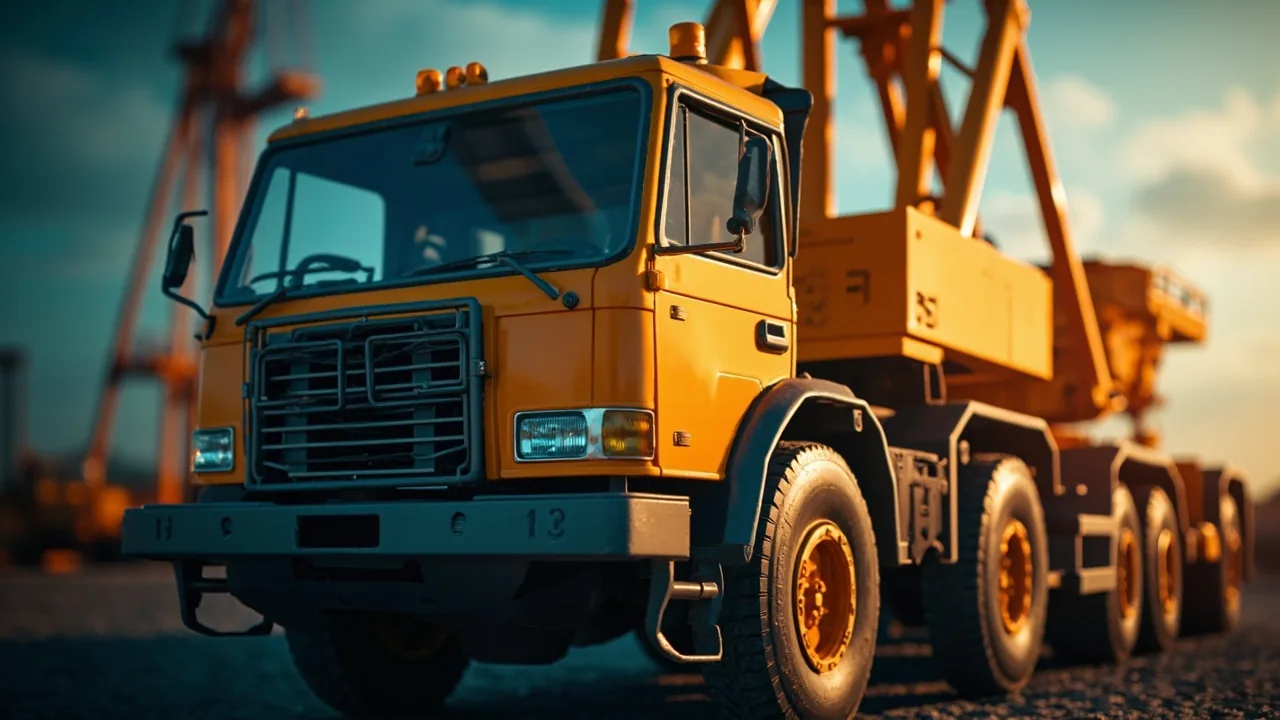

Leasing a tower crane lets a Canadian construction company put one of the tallest, most expensive machines on a major project to work without buying it outright. On a major build, the crane you choose can make or break both the schedule and the budget.
Tower cranes are now fixtures on sites across the country, from the high-rises changing Toronto's skyline to the industrial work in Alberta and B.C. Their price pushes most builders toward leasing rather than buying.
Understanding Tower Cranes and Their Role in Major Projects
A tower crane is a fixed cable crane that lifts material up and across a site. It is built from a vertical mast, a horizontal jib that reaches out to move loads, and a counter-arm that balances them. The operator runs the hoist, trolley, and slew from a cab near the top of the mast, placing material exactly where it is needed.
Tower cranes dominate large projects because they lift heavy loads to great heights while taking up little ground, which suits tight urban sites where crews need room below. A typical unit on a Canadian high-rise lifts up to about 20 tonnes and reaches 50 to 80 metres out from the mast.
Canadian builders rely on them for residential towers, office buildings, industrial plants, and infrastructure, from downtown Vancouver to new developments in Calgary and projects in Montreal. The right machine improves both productivity and safety on the job.
Benefits of Leasing Tower Cranes for Canadian Businesses
The main benefit of leasing a tower crane is avoiding the purchase price. Buying a quality machine costs anywhere from $500,000 to more than $2 million depending on specifications and capacity, money that could instead hire crews or fund the next bid.
Leasing turns that capital cost into a predictable operating cost. Monthly payments spread the expense across the project or longer, which makes budgeting and cash flow easier and protects your credit lines and working capital.
Operating lease payments are usually fully deductible as a business expense in the year you incur them, which can work out better than ownership at tax time. The Canada Revenue Agency's guidance on leasing costs says to “Deduct the lease payments incurred in the year for property used in your business.” (CRA)
Leasing also protects you from depreciation. Like all heavy equipment, tower cranes lose value to wear and obsolescence, and with a lease the leasing company carries that risk. You can also move to newer models with better safety, efficiency, and controls, keeping your fleet current without a large capital outlay.
Tower Crane Fleet Options and Specifications
Tower cranes come in a few configurations, and the jib style is one of the first choices. A flat-top design drops the diagonal strut for greater hook height in tight spaces, which makes it a favourite on dense urban sites where every metre counts.
A luffing crane angles its jib up and down. That is valuable near existing structures or under airspace limits, since it can swing loads over obstacles without extra clearance behind. For Canadian projects close to airports or in regulated airspace, that flexibility often makes compliance possible.
Reach is set by the jib length, and maximum capacity varies by model and setup. Most units on Canadian sites fall in the 6-to-20-tonne range with jibs of 50 to 80 metres. Specialty machines above 30 tonnes exist for heavy industrial work such as power plants or bridge installations.
When you compare options, consider the height you need, the heaviest load you will lift, and how often you lift. An experienced dealer can match the machine to the job so you get the right capability without paying for capacity you will never use.
Leasing Tip
Lease a little more capacity than your immediate needs suggest. Projects change, and a job often ends up needing heavier lifts or more reach than first planned. A small buffer in the lease saves a costly equipment swap mid-project.
Tower Crane Rental vs. Lease: Making the Right Choice
The choice between renting and leasing a tower crane depends mainly on your timeline.
| Rental | Lease | |
|---|---|---|
| Typical length | Days to a few months | One to five years or more |
| Suits | Changing needs, emergencies, testing a machine type, a single short job | Ongoing needs, back-to-back projects, steady year-round work |
| Support | Usually less | Often bundles maintenance, upgrades, and other support |
| Drawbacks | Can cost more over a long period and be scarce in peak season | Longer commitment |
A rental offers maximum flexibility. A lease is steadier and more predictable, and for a builder with ongoing work it tends to deliver better value and more reliable access. Which one fits depends on your project mix, your cash flow, and how long you will need the machine.
Canadian Considerations for Crane Leasing
Crane leasing in Canada involves factors tied to the climate, regulations, and economy. Knowing them up front prevents surprises mid-project.
Provincial rules govern crane operations, with each province setting its own safety standards and operator certification. B.C. works under WorkSafeBC, Alberta under its OHS Code, and Ontario under the Occupational Health and Safety Act. Make sure your operators hold the right certifications for where they work, and that your lease accounts for regional compliance.
Weather is the other major factor. Extreme cold, snow, ice, and high wind all affect performance and safety. When you negotiate, discuss cold-weather packages, de-icing, and wind monitoring, and confirm the machine is rated for the temperatures your site will see.
Currency matters too, since much of this equipment is imported and priced in US dollars or euros. Canadian leases are usually priced in Canadian dollars, but exchange rates affect the underlying cost and, in turn, lease rates across the market. Factor that into your budget.
Provincial sales tax treatment of equipment leases varies, so have your accountant check your case. Capital cost allowance covers depreciation on owned equipment, but the immediate deductibility of operating lease payments often makes leasing the better tax choice for a growing company.
How to Choose the Right Tower Crane for Your Project
Choosing the right tower crane means matching its specifications to the work: the heaviest load you will lift, the hook height you need, and the radius to reach every part of the site. Different phases bring different demands, so plan for the hardest lift, not the average.
Site constraints often drive the choice as much as the lifts. In a dense urban setting, the crane has to fit the footprint while still covering the whole build. The ground also has to take the loads coming through the base, so your site investigation should confirm the unit's ground-pressure ratings suit your soil.
Operators need specialized training and the right certifications for the equipment they run. When you set up the lease, confirm training is available in your region and budget for it if needed.
Maintenance and service support should also weigh on the decision. Look for a dealer offering regular maintenance, fast emergency response, and parts on hand. Downtime from a failure can cost far more than the lease itself.
Ready to lease a tower crane? Apply for equipment financing or estimate your monthly payment.
Frequently Asked Questions
What is the typical duration of a tower crane lease in Canada?
Usually 12 to 60 months, depending on the project and your preference. Six-to-twelve-month deals cover smaller jobs, and three-to-five-year terms tend to get better rates for ongoing needs. Some leases include a buyout at the end, which suits a company that eventually wants to own.
Are tower crane lease payments tax deductible in Canada?
Yes. Operating lease payments on equipment used in your business are generally fully deductible as business expenses in the year you incur them. With ownership, depreciation is spread over years instead. Confirm your own situation with an accountant.
What maintenance is included with a tower crane lease?
Most leases include regular preventive maintenance, scheduled inspections, lubrication, and component replacement as needed. Emergency repair may be included or cost extra. Read the lease so you know what is covered and what is your responsibility.
How do I determine which tower crane specifications I need for my project?
Start with the heaviest lift, the hook height, and the radius needed to serve the whole site. An experienced dealer knows what your project type usually demands and can help you avoid both over- and under-specifying.
Can tower cranes be used year-round in Canadian winters?
Yes. Machines built for Canadian conditions run all winter, though depending on temperatures you may need a cold-weather package with heated cabs, specialized hydraulic fluids, and hardened electrical protection. Wind monitoring matters even more in winter. Discuss your location and conditions with your dealer so the unit is properly equipped.
Share this article
Need Equipment?
Get approved for equipment financing in as little as 24 hours. No obligation application.
Get a Free QuoteOr call us directly
1-833-924-9554